

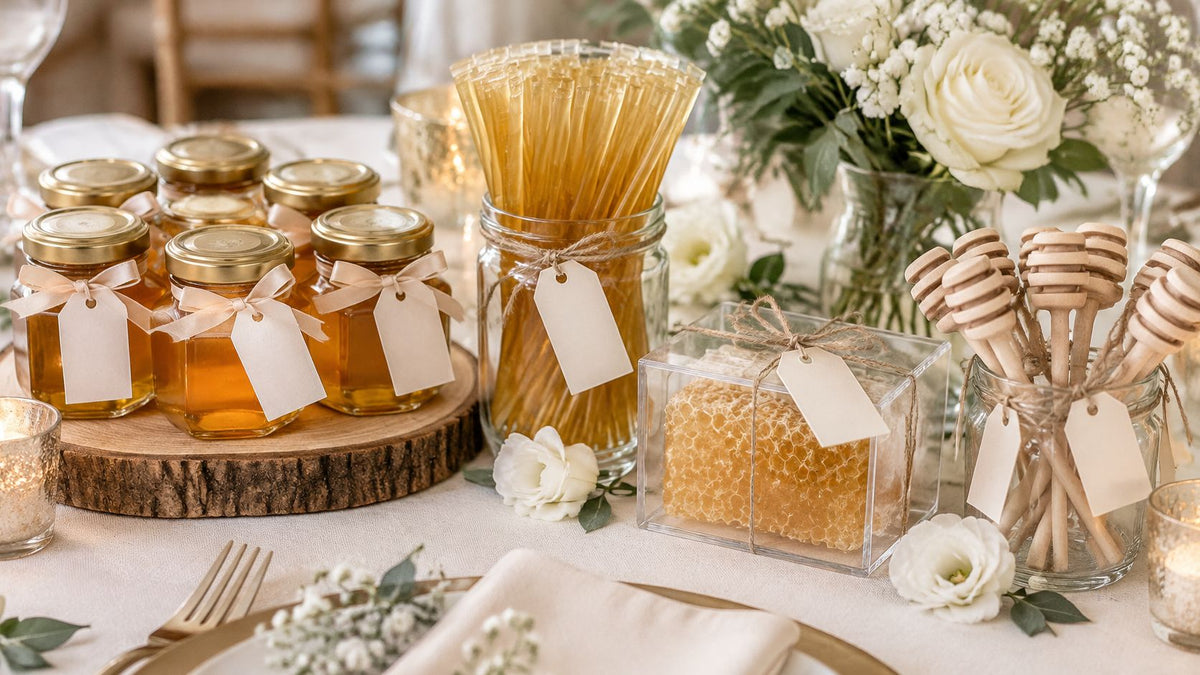
Honey Wedding Favor Ideas: 8 Sweet Picks for 2026
You've got a spreadsheet open with three columns: guest count, cost per guest, and a note that says "something guests won't leave on the table." The venue wants a final number by Friday. Your aunt has opinions about trinkets. Somewhere between the seating chart and the cake tasting, you're supposed to pick a favor.
Honey handles the part that matters. Guests eat it, take it home, and use it on toast the week after the wedding instead of abandoning it on a hotel nightstand. What changes from one format to the next is the constraint it solves: a single stick costs almost nothing to hand out, a boxed honeycomb square feels like a real gift, and a three-jar tasting set asks guests to sit down and compare.
I pack honey for a living, so I'll skip the mood board and tell you what each format does well, how much handling it takes, and where it falls apart. Every pick below gets a personalization step and a presentation note, so you can walk the list against your guest count and budget and cross off what won't work.
The eight honey wedding favor ideas here are sorted by the constraint they solve, not by how they photograph. Pair this with a smart wedding to do list so the favor order lands before your venue deadline, not the week of.
Table of Contents
- 1. California Wildflower Honey Stick Favors
- 2. Pomegranate Honey Stick Favors
- 3. 12 oz Squeeze Honey Bear Favors
- 4. 1 lb Jar Favors with Custom Tags
- 5. Honeycomb Square Favors
- 6. Three-Variety Tasting Trio Favors
- 7. Super Honey Favors for Bee-Product Fans
- 8. Origin Tasting Favors with Cactus, Brazilian Wildflower and Blackberry Honey
- How the eight honey favor options compare
- Choose Your Favors and Order Early
1. California Wildflower Honey Stick Favors
Start here when the guest list is the hardest number in the whole plan. A honey stick is a single serving of honey sealed inside a straw. Snip or bite the end, squeeze, and it's gone. No spoons, no sticky jars sweating in the sun, no box for guests to carry to the car.
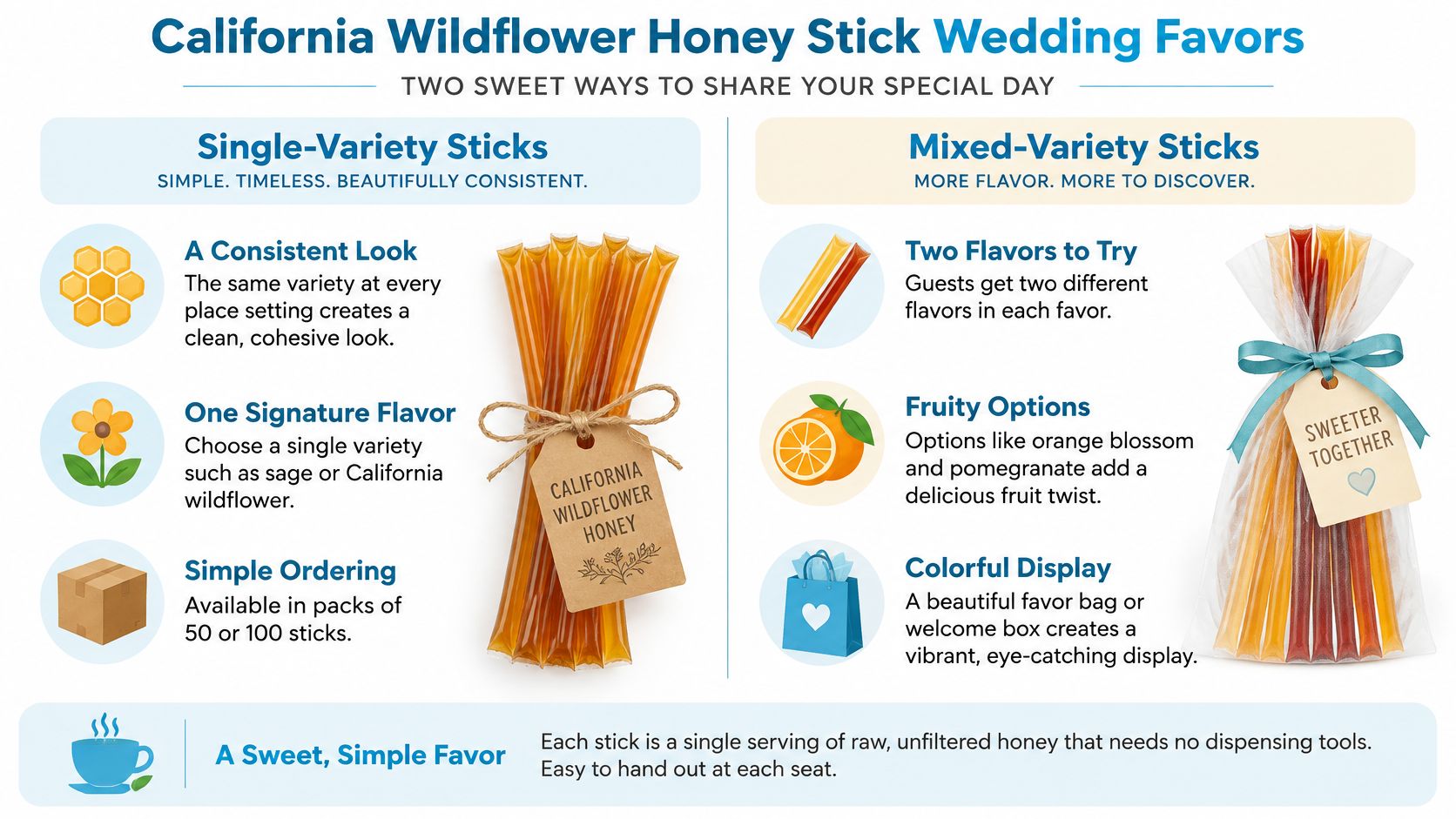
The Knot's 2025 Real Weddings Study, which surveyed 16,956 U.S. couples married in 2024, reported an average of $460 spent on wedding favors and gifts combined, with couples at 50 guests or fewer averaging $301 and couples above 100 guests averaging $529. Against those numbers, a stick per guest keeps the line item low even when the headcount climbs. Say the final list lands at 120: order a stick for every seat, then add about a tenth more for dropped straws and late RSVPs.
Where Sticks Beat Jars
Small formats keep the total steady when the count runs high. Topanga Quality Honey lists California Wildflower Honey Sticks from $41.81, and the format earns its keep after the wedding too. A stick stirs into tea, squeezes over toast or oatmeal, and slips into a lunch box, gym bag or carry-on without leaking, so guests use the favor instead of shelving it.
- Order one stick per seat, then add about 10%. The surplus covers breakage and the cousin who takes three. Above 75 guests, running a second flavor as sticks is cheaper and easier to pack than doubling a jar format.
- Tie one ribbon per stick, and put the date on the card. Stick ends are narrow, so keep tag text to names and date only. Net weight and the infant warning belong on the outer card, not the straw.
- Pick sage honey for a mild second option. It's a light honey that suits tea and everyday pouring, and it adds sweetness without a strong honey flavor for guests who prefer things gentle.
For presentation, lay one stick across each folded napkin or tuck it into the escort-card envelope so the favor reaches guests before the toasts start. A bundle of sticks in a low mason jar works on a welcome table without any styling effort.
Orange blossom is the other easy crowd pleaser, with a citrus aroma and a smooth, silky body, and orange blossom honey sticks keep that profile in single servings. Choose one variety and every place setting matches. Mix two and guests get a small choice to talk about.
2. Pomegranate Honey Stick Favors
Say 140 guests at a fall reception, and the couple wants a favor with more personality than a standard gold stick. Run two flavors: pomegranate for the guests who try anything, sage for the ones who stir honey into tea every morning. A 100-count pack of sage covers half the table, since sage sticks come in packs of 50 or 100 and work anywhere a gentle sweetness is wanted, from tea to biscuits, yogurt or fruit. Pomegranate sticks fill the other half of each bag.
The packing math stays simple. Nest one of each flavor in a glassine bag with a two-line card, and you need 140 bags plus extras for breakage. Pomegranate Honey Sticks are listed from $41.81, so build that into the per-guest budget before you commit to the pairing.
Because a pomegranate stick reads differently from a plain honey, the tag has to say so.
Label rule: put the flavor name on the tag, not just "honey." Guests who want a classic honey should spot their option at a glance, and nobody should have to guess what the darker straw holds.
Personalization for this one is mostly a color decision. A deep red ribbon against a kraft tag ties the favor to a garnet or burgundy palette, and a short note like "sweet beginnings" fits the fruit without a pun overload.
Presentation matters more than people expect. Stand the sticks upright in a shallow wooden tray near the escort cards rather than laying them flat, so guests see the tint through the straw as they find their seats. Sticks also earn their keep after the reception: they pack easily into lunch boxes, gym bags and suitcases, so the favor keeps working on the honeymoon flight home.
If guests want the backstory before the wedding, a closer look at pomegranate honey sticks and how to serve them covers it in plain terms.
3. 12 oz Squeeze Honey Bear Favors
A squeeze bear is the favor guests use without thinking about it. The 12 oz bottle sits on the counter, squeezes clean, and gives a household enough honey for a few weeks of toast. That's a lot more useful than a shot-glass-sized jar that's empty after one breakfast.
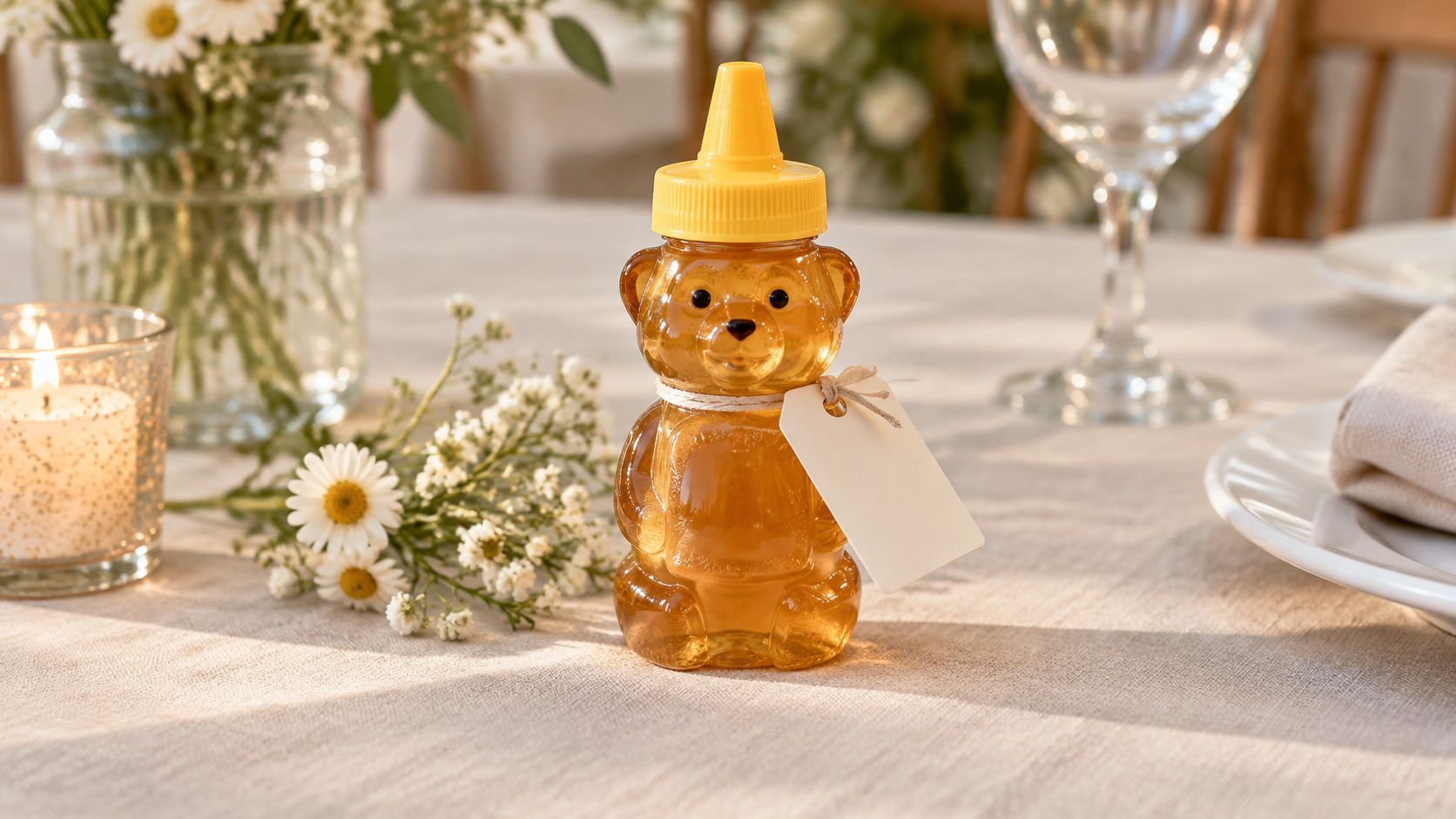
Packaging choice matters to buyers, not just to planners. In a 2024 survey of 2,469 adult food shoppers, 64% reported buying honey in glass bottles or jars and 51% bought squeezable plastic packaging, and more than 60% preferred products containing honey over comparable products without it (National Honey Board consumer survey). That split is why I'd never stock a favor table with one format only. Glass for the sit-down dinner, squeeze bears for the outdoor or destination crowd.
Match the Bear to the Menu
The squeeze format pairs best with a flavor the couple serves. If the reception has a biscuit bar, buckwheat honey brings a dark, malty flavor that guests will remember and ask about. If dessert is light, a pale, mild honey makes more sense.
- Tag the neck, not the cap. A small card looped around the neck reads clearly while the bear stands upright, and it doesn't peel when the bottle sweats.
- Set one bear at each place setting so guests can use it during the meal. It doubles as table decor and saves you a separate favor station.
- Skip anything that hides the honey. Stickers over the label body look cheap at a formal table, so print a single label with names, date and variety.
One practical note on bears: they're light and easy to move, but they tip. Pack them in shallow boxes with dividers, and set them out no more than an hour before guests arrive.
4. 1 lb Jar Favors with Custom Tags
A 1 lb jar is the most recognizable honey favor there is. Clear glass, visible honey, a label with the couple's names on it. It works at a black-tie dinner and at a barn reception, and it gives guests a real amount to cook with after the wedding.
Budget is the constraint here. aisle.wedding's wedding favor guide reports that 56% of couples who had already married spent $5 or less per guest on favors, with 23% spending under $2, in a sample of 355 couples who gave favors. A full pound sits at the top of that per-guest range, so this format fits a smaller list, an intimate dinner, or one jar per household rather than one per person. Volume helps: orders of 2 or more jars, bears, sticks or honeycomb get 10% off, which takes some sting out of a premium favor.
Labeling trips couples up more than the price does. The FDA guidance on labeling honey and honey products treats plain honey as a single-ingredient food, so it needs no ingredient statement. Net quantity still applies, and floral source is optional: you may name a blossom when you have information supporting it as the chief floral source.
Labeling shortcut: plain single-variety honey needs no ingredient list. Anything blended needs a full ingredient statement, so keep those two designs separate.
Match the variety to how guests will use it. Avocado honey is a dark honey, and dark varieties like avocado, buckwheat and eucalyptus stand up to baking, marinades and cheese boards, so it suits guests who cook. For a lighter crowd, clover is the classic mild, gently floral American honey, good in tea, coffee, dressings and sauces. If you're weighing cost before you commit, what drives raw honey pricing explains the variables.
- Use a round label with a monogram so the design stays consistent across every jar, and add the variety name in small print.
- Add a short how-to line. "Try it on toast or in tea" answers the question guests are too polite to ask.
- Dress the jar for the room. A kraft tag tied with twine reads rustic; a printed seal over the lid reads formal. Pick one style and run it across every jar.
- Plan for crystallization. Raw honey may crystallize naturally and it's still good. Set the jar in warm, not boiling, water to re-liquefy it.
5. Honeycomb Square Favors
Honeycomb is the one favor guests photograph before they eat it. In an 11 oz boxed honeycomb square, the honey stays sealed inside its beeswax cells, so guests can see how the hive stores it. The box keeps the comb protected and makes the favor easy to stack on a table.
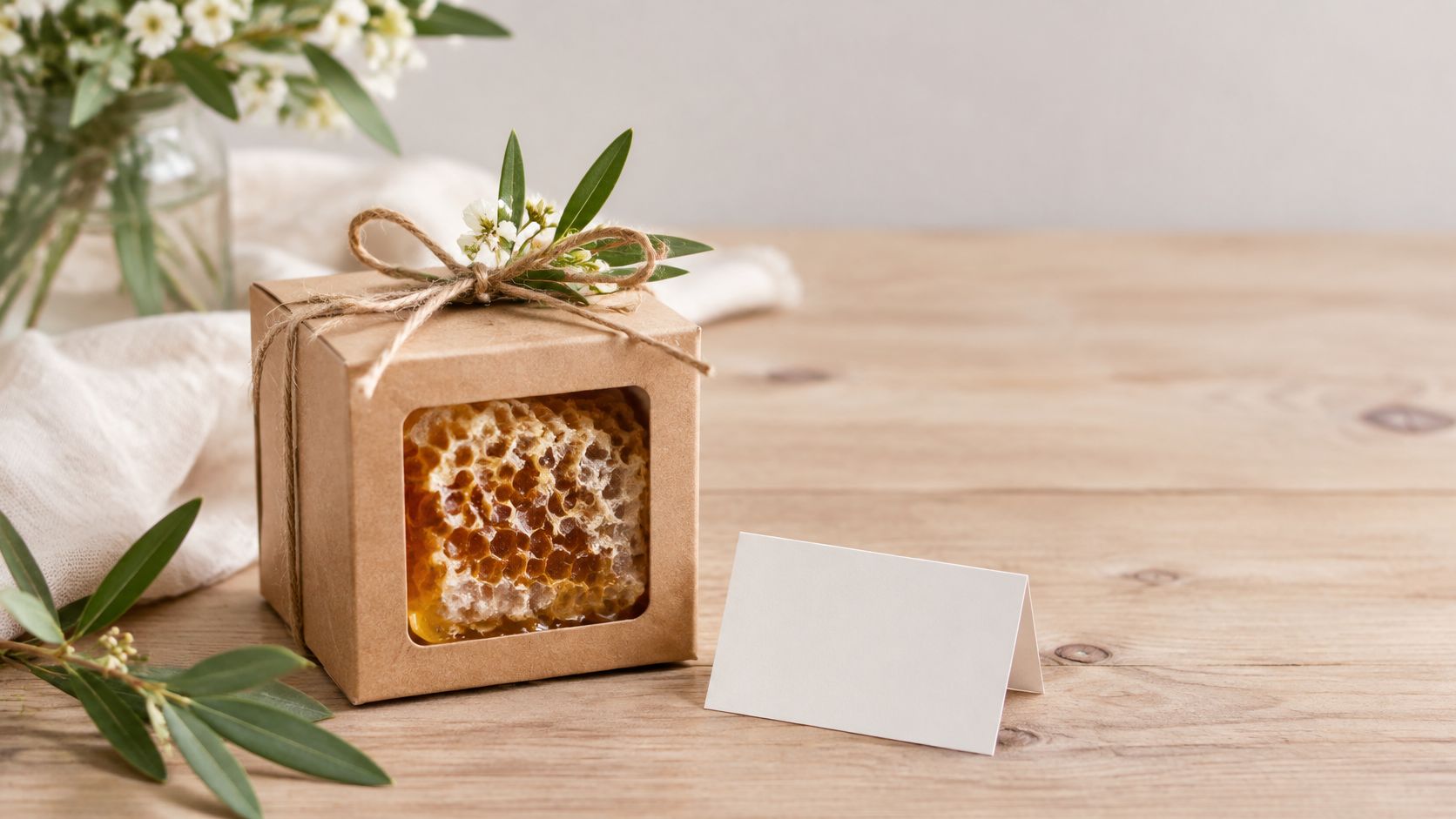
Timing is the reason this format works for couples who plan early. Properly sealed honey keeps for years, though color and aroma shift over time. The National Honey Board's honey FAQ gives two years as a practical shelf-life figure, and notes that crystallization is a natural physical change rather than spoilage. So a comb favor boxed in spring still looks and tastes right at a fall wedding, as long as you store it properly.
How Guests Eat Comb
Some guests will stare at it. Give them one line of instruction on the card and watch the table get curious.
Here's the whole method: cut a small piece, put the comb on toast, biscuits or cheese, chew the wax, and swallow or set it aside. The wax is edible and soft.
- Keep boxes cool and out of direct sun. Heat softens the comb and the box starts to show it.
- Pair one square with a small jar for guests who'd rather pour than chew.
- Set a card that names the floral source so the favor doubles as a five-second story about where it came from.
A worked example: at a 70-guest garden wedding, one comb square per couple plus a shared jar gives you roughly 40 boxes, which fits a tighter budget and still feels generous on the table.
6. Three-Variety Tasting Trio Favors
A tasting trio turns the favor into an activity. Three small honeys side by side let guests compare a pale variety against a dark one in the same sitting, and that comparison is what people remember.
Budget this one carefully, because three containers cost more than one. Zola's wedding favor guidance puts a typical per-guest favor budget at roughly $2 to $5. A trio lands above that range, so it suits a smaller guest list or a VIP gift alongside a simpler favor for the full table.
You have two set formats to work with. The 3 x 12 oz gift set is three squeeze honey bears at $59.65, easy for guests who drizzle rather than spoon. The 3 x 1 lb set is three glass jars at $72.22 for a more traditional look. Either way, you pick the varieties, so the trio matches the couple's taste instead of a fixed assortment. Tell us which honeys you want when you place the order.
Build the Trio
The structure that works is light to dark. Sage honey is gently floral and slow to crystallize, so it makes a clean starting point. Buckwheat sits at the other end, dark with a malty, molasses-like flavor. Put a medium honey in the middle and guests get a real progression across the set.
- Pick one light and one dark at minimum. Contrast is the whole point of a trio.
- Include a tasting card that describes each flavor in one line and suggests what to put it on. Print the couple's names and wedding date on the back so the card does the personalization work.
- Box the set as one gift. Stand the three bears or jars upright in a small tray so they travel together and read as a single present on the table.
- Seal each container properly. Tamper-evident packaging and a legible net weight matter more when a guest opens three pieces instead of one.
For the comparison itself, how to taste honey walks through the order and what to look for. A trio also solves the guest who skips sweets: three small honeys disappear into a kitchen faster than one large jar.
7. Super Honey Favors for Bee-Product Fans
A 12 oz jar of Super Honey suits guests who enjoy a fuller, more textured honey. The blend combines raw honey with bee pollen, propolis and royal jelly, giving it a slightly tangy flavor.
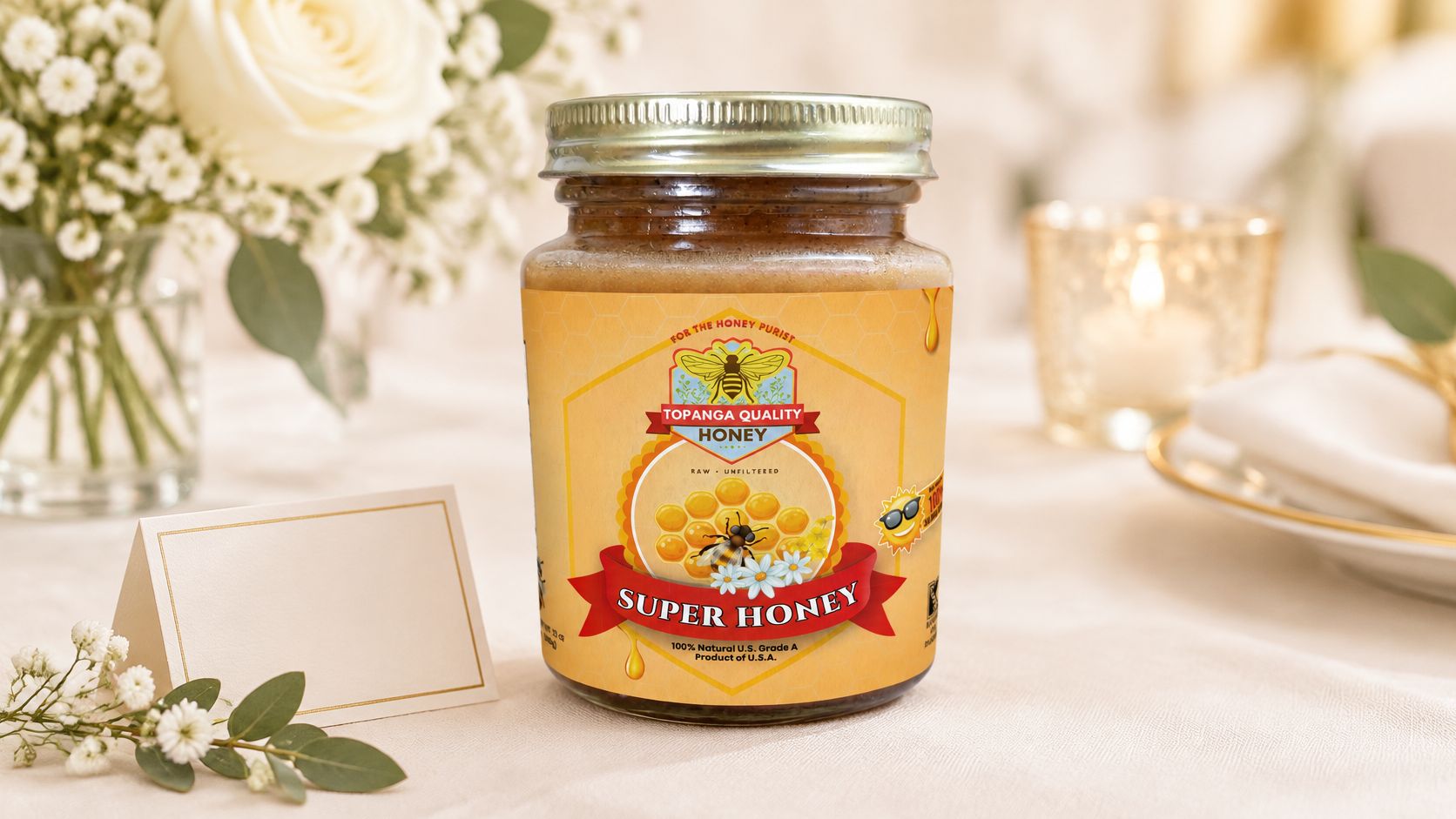
Use this favor for a smaller guest list or as an add-on in a favor bag. A 12 oz jar makes a generous gift, so it may not suit a tight per-guest budget for a large wedding. Topanga Quality Honey sells Super Honey with Pollen, Propolis & Royal Jelly, 12 oz.
Honey should not be given to children under 12 months because it may contain Clostridium botulinum spores associated with infant botulism, according to Purdue Extension's honey food-safety guidance. Put the infant warning on the favor tag, where guests can see it.
Print it on the tag: “Not for children under 12 months.”
- Offer a non-food favor alongside the jars for guests avoiding honey or bee products.
- Describe the blend's flavor and texture on a small card so guests know what to expect.
- Keep the wording factual. Avoid health-benefit claims.
8. Origin Tasting Favors with Cactus, Brazilian Wildflower and Blackberry Honey
At the brunch after the reception, three jars move down the table while guests read the cards aloud and argue over which one they liked best. That is what this favor is built for: three single-variety honeys, each with its own color, aroma and flavor, set out side by side so people can compare them.
cactus honey sits at the lighter end of the range, the kind guests will stir into tea at home, while Brazilian wildflower and blackberry give the set contrast in color and taste. Since the honeys all come in the same standard jar sizes, ordering the trio in matching 1 lb jars keeps the display table uniform and the packing simple.
On cost, Zazzle lists a small packaged baby shower honey favor at $4.04 per item (Zazzle listing). Treat that figure as the floor for any packaged honey favor, not the target. A set built from three full-size jars will run well above it per guest, which is why this format fits smaller guest counts, or one set per couple rather than one per seat.
- Write one origin card per jar with the variety name and a two-word flavor note.
- Ask guests to rank the three from mildest to boldest. It turns a favor table into a two-minute conversation.
- Order one set per couple rather than per guest to keep the count and the cost in line.
A jar that names its variety does the explaining for you. Guests remember "the blackberry one" long after they've forgotten the centerpieces.
This format suits a destination wedding, a couple with family spread across regions, or a reception where the food is the entertainment. It is the least decorative option on this list and the one guests will still be tasting a month later.
How the eight honey favor options compare
Use this table to match each option to the size of your guest list, spending limit, likely use after the wedding, and presentation style. These are planning ranges, not product minimums or quoted prices.
| Favor option | Guest-count fit | Per-guest budget | Use after the wedding | Personalization and presentation |
|---|---|---|---|---|
| California Wildflower Honey Stick | Large lists, especially when favors are handed out individually | Low | Lunch boxes, hikes, travel, or a quick sweetener | Add a name and date to a small tag; arrange sticks upright in a basket |
| Pomegranate Honey Stick | Large lists that suit a fruit-forward theme | Low | A portable single serving | Match the tag to the wedding colors; group sticks in a bowl near the exit |
| 12 oz Squeeze Honey Bear | Small to medium lists with room for a practical favor | Medium | Everyday use in the kitchen | Tie on a short thank-you tag; set bears in rows on a favor table |
| 1 lb Jar with Custom Tag | Smaller lists with a higher per-guest allowance | High | Baking, tea, coffee, or serving at home | Print names and the wedding date on the tag; arrange jars by table or family |
| Honeycomb Square | Small lists or a shared favor for a couple | Medium to high | Serving with cheese or fruit | Add a simple flavor note; keep the comb protected in its box until guests take it |
| Three-Variety Tasting Trio | Smaller lists where guests will enjoy comparing flavors | High | Tasting the honeys side by side | Label each variety clearly; group the three jars together on a tray |
| Super Honey | Small lists of guests curious about bee-product blends | Medium to high | A distinctive pantry item | Use a clean, readable label; place favors where guests can inspect them |
| Origin Tasting Favors | Smaller lists with a food-focused or regional theme | High | Comparing the varieties at home | Label the cactus, Brazilian wildflower, and blackberry honeys; set the jars together with a tasting card |
For a more precise budget, divide the total favor allowance by the number of favors you plan to give. If couples will share an origin set, count one set per couple rather than one per guest. For presentation, keep labels facing forward and leave enough room for guests to pick up a favor without shifting the display.
Choose Your Favors and Order Early
Start with two numbers: guest count and per-guest ceiling. A 130-guest reception with a modest per-guest budget points straight at sticks. A 60-guest dinner with room to spend points at jars, comb or a trio. The format decision is what prevents a box of leftovers; flavor can be tuned inside the set.
Then match the favor to where the honey will live after the wedding. Sticks go in lunch boxes, gym bags and desk drawers. Bears and jars stay in the kitchen for toast, tea and marinades. Comb belongs on a cheese board. A trio gets tasted side by side. Choose the one your guests will finish, then add the tag, ribbon or label that ties it to the room.
Order early enough to absorb a shipping problem. Sealed honey keeps, so a box that arrives three weeks before the date is one less thing to worry about. A box that lands three days before is a crisis.
When you order a gift set, tell us which honeys you want when you place the order, and we'll pack the varieties you choose. Buy 2 or more jars, honey bears, honey sticks or honeycomb and you get 10% off. Shipping is free on continental U.S. orders of $50 or more, with a $9.95 flat rate below that.
Two places to start: the honey sticks collection if your list is long, or the full raw honey collection if you're building a favor table with more than one format. If you can't decide between pale and dark, our honey varieties guide explains what each one tastes like.
Topanga Quality Honey is a family-owned California beekeeping company, and every favor on this list is packed in California. All of it is raw, unfiltered, organic and kosher, sold in 1 lb and 3 lb jars, 12 oz squeeze bears, honey sticks, honeycomb and gift sets you can fill with the varieties you choose. Visit Topanga Quality Honey to pick your format and get the order in before your venue deadline.