

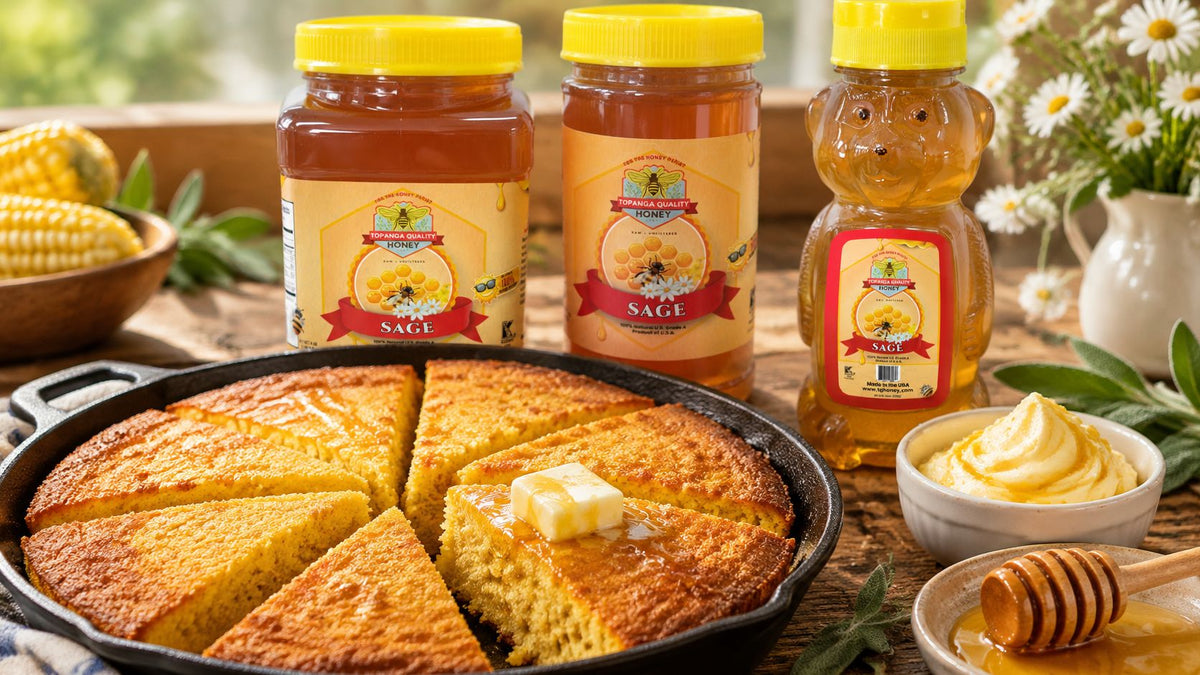
Honey Butter for Cornbread: Ratios and Method
The cornbread is out of the oven, the chili is ready, and you're looking at a stick of butter and a jar of honey. You want something that spreads smoothly over a warm square, not a sugary puddle that hides the corn flavor.
Good honey butter for cornbread starts with a choice: keep it butter-forward for dinner, or make it sweeter for plain breakfast bread. Either way, mix the topping separately from the batter. That gives you control over sweetness without changing the loaf you've already baked.
Table of Contents
- Honey Butter Ratios That Fit Cornbread
- Pick a Honey for the Spread
- How to Mix Honey Butter for Cornbread
- Fix Grainy Runny or Separated Spread
- Honey in the Batter Instead of on Top
- Serve the Pan and Finish Strong
Honey Butter Ratios That Fit Cornbread
For a butter-forward topping, mix 2 tablespoons softened butter with 2 teaspoons honey. That's about 3 parts butter to 1 part honey by volume, a benchmark used in the King Arthur Baking cornbread instructions. The butter stays in the lead, with enough honey to soften its savory edge.
Softened butter should give under a spoon without looking oily. Melted butter makes a drizzle instead of a spoonable spread.
Choose your sweetness before mixing
Honey butter ratios for cornbread
| Spread style | Butter | Honey | Result |
|---|---|---|---|
| Everyday cornbread topping | 2 tablespoons softened butter | 2 teaspoons | Butter-forward and lightly sweet |
| Equal-volume sweet spread | 1/2 cup softened butter | 1/2 cup honey | Distinctly sweet and softer |
The equal-volume ratio appears in a recipe cited by a historical survey of honey. On a plain loaf, it makes the topping much sweeter and softer, so a thin layer is enough to change the bite.
Honey also adds carbohydrates and calories. A tablespoon contains about 21 grams of honey, 60 calories, 16–17 grams of carbohydrate, and roughly 16.4 grams of sugar, according to the USDA-derived honey nutrition profile. Half a cup, about 170 grams, contributes roughly 517 calories and 140 grams of carbohydrate from honey alone.
Those numbers describe the honey, not the finished spread or one serving. Butter supplies nearly all the fat, and the amount spread on each square determines how much of the batch you eat.
Practical rule: Taste the cornbread before making the topping sweeter. Sweet bread usually needs less honey in its butter.
Pick a Honey for the Spread
A mild honey lets cornbread stay at the center of each bite. Choose a single-variety honey to keep its floral character clear. Super Honey, a blend of raw honey with bee pollen, propolis, and royal jelly, has a thicker, more textured feel than plain honey.
Start mild, then try deeper flavors
Raw Sage Honey is a gentle choice for classic skillet cornbread. Its mild sweetness suits a spread when you want the corn flavor to remain prominent.
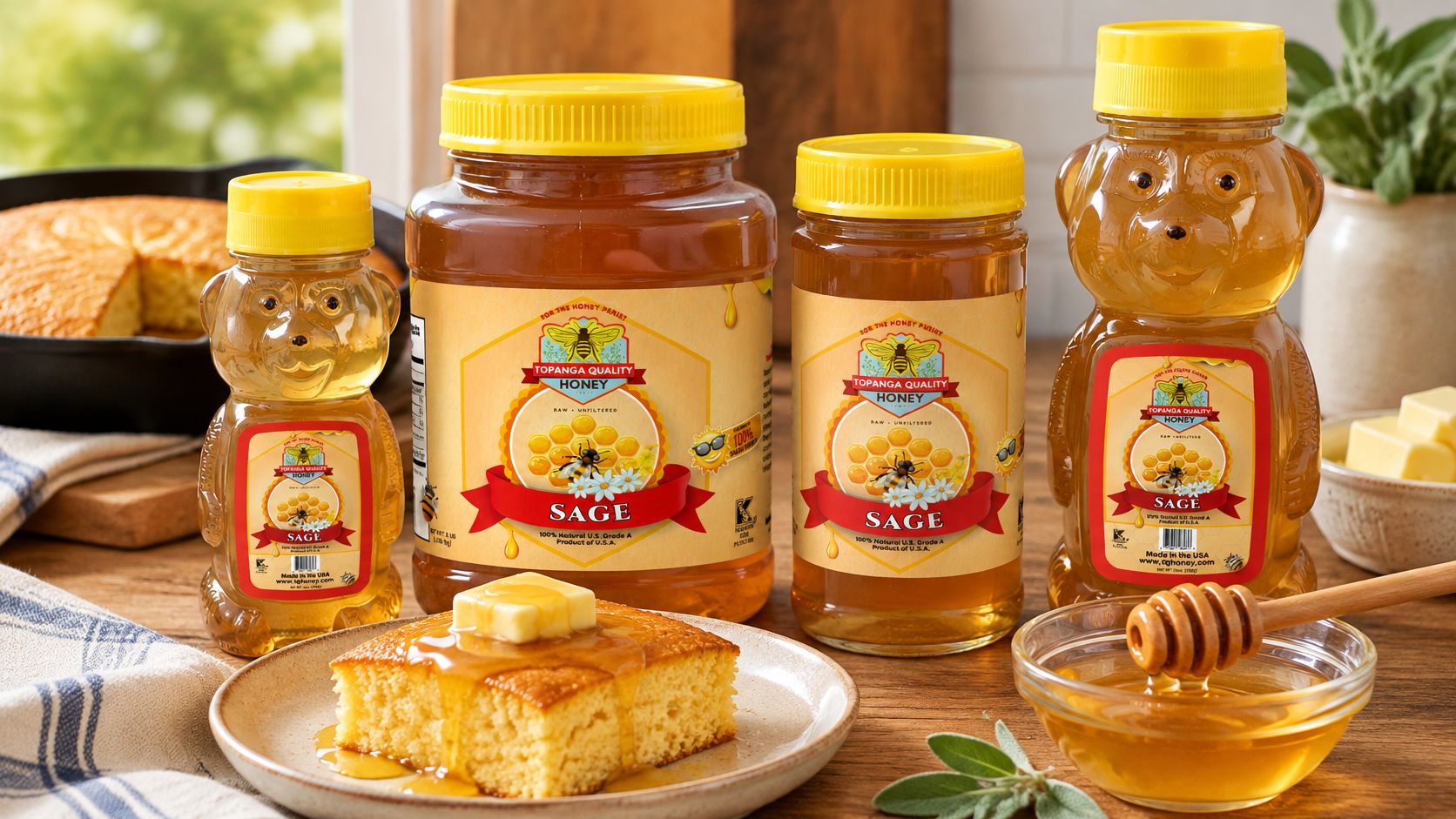
Match the honey to what's on the plate:
- Breakfast squares or chili night: Orange blossom honey has a smooth, silky body and a citrus-grove origin.
- A familiar everyday taste: Raw Clover Honey is light in color, mild, sweet, and gently floral.
- Savory bread with a richer finish: Raw Avocado Honey has a rich, buttery taste with notes of molasses and caramel.
- A darker contrast: Raw Buckwheat Honey is very dark, with a malty, molasses-like flavor that is less sweet than lighter honeys.
- A delicate alternative: Raw Cactus Honey, made from the nectar of the cardón cactus, is nearly white, thick, creamy, and mildly sweet.
Taste before the butter softens the differences
Taste a little honey on its own, then try it with butter on plain cornbread. Butter rounds out the honey's flavor, much like a soft frame around a picture. A honey that tastes assertive by itself may feel balanced in the spread.
A guide to tasting honey's flavor notes can help you notice floral, herbal, and darker flavors. Color offers a clue, but tasting gives you a clearer sense of how the honey will pair with cornbread.
Topanga Quality Honey's varieties are raw, unfiltered, organic, and kosher. Its honey is packed in California, while the floral source may be elsewhere.
How to Mix Honey Butter for Cornbread
A warm cornbread slice is ready, but the honey butter is still firm from the refrigerator. Mix the spread ahead, then let the bread's warmth soften it on contact.
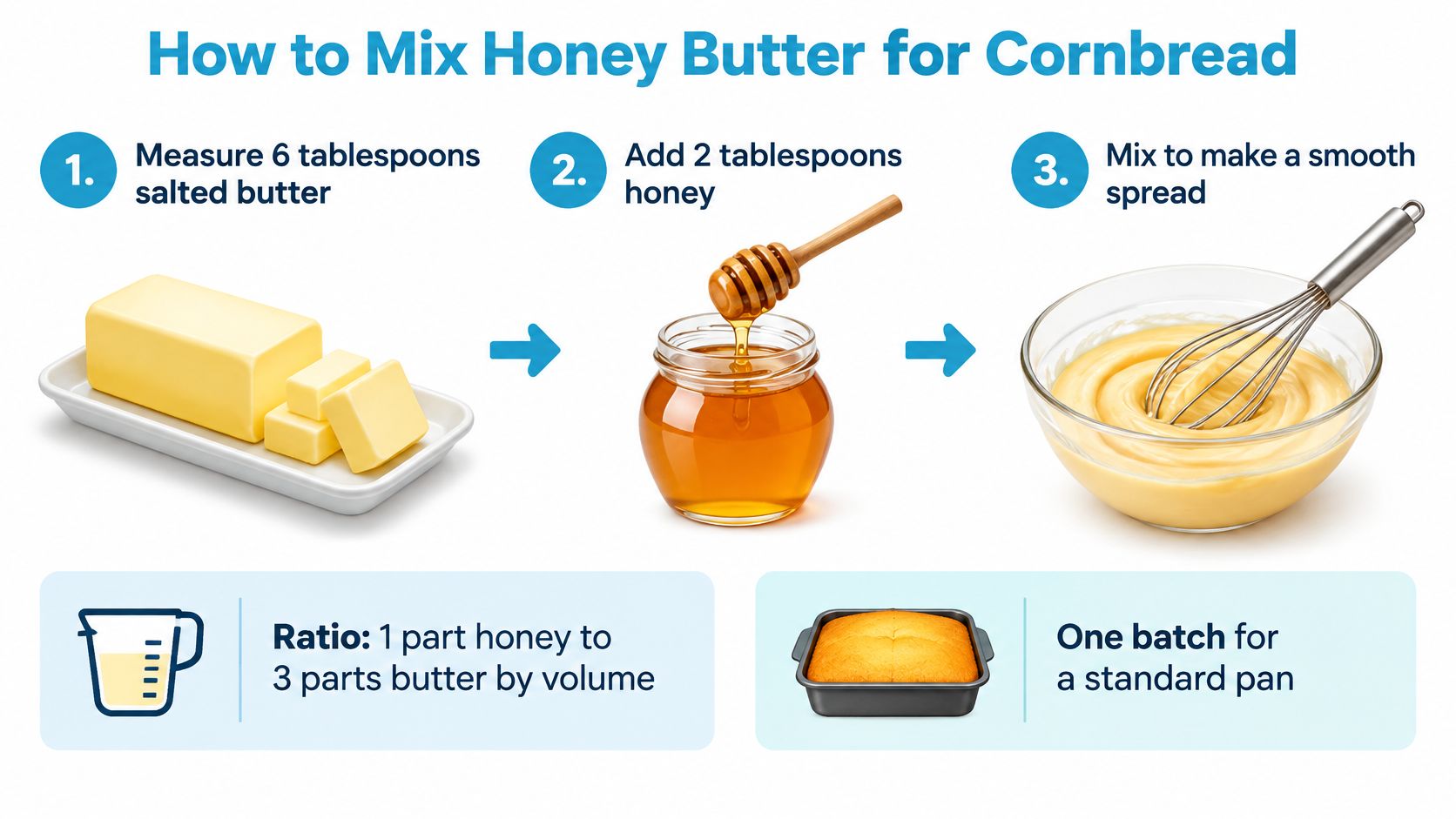
For a batch to serve beside a standard pan, use 6 tablespoons salted butter and 2 tablespoons fluid, single-variety honey. You'll need a small bowl, measuring spoons, a fork or hand mixer, and a flexible spatula. A fork gives a denser spread; a mixer makes it lighter.
Mix and firm the spread
- Soften the butter evenly. Leave it out until a fingertip leaves a mark. It should mash smoothly, not look shiny or oily.
- Measure the honey separately. Fluid honey blends more easily. Scrape the measuring spoon with a spatula so the measured amount goes into the bowl.
- Beat the butter first. Mash or beat until smooth, then drizzle in the honey as you mix. Scrape the bowl's sides and bottom until the color is even and no honey streaks remain.
- Cover and refrigerate for at least 30 minutes. Chilling firms the spread so it softens on warm cornbread instead of sliding off right away.
Finish with warm, cleanly cut slices
- Check the texture after chilling. The butter should hold its shape but yield easily to a knife. If it feels too firm to spread, let it sit briefly at room temperature.
- Cut the cornbread once it holds together. A settled crumb is less likely to tear under the knife. Spread a thin layer of honey butter on each warm slice.
- Let the topping soften on the bread. The residual warmth melts the butter gradually, keeping it on the slice rather than turning it into a puddle across the pan.
This method is for a finishing spread, not a cornbread batter formula. Use a cornbread recipe you trust, and adjust how much spread you serve to suit the sweetness of the bread.
For a visual companion while preparing the bread and topping, use the video below.
Fix Grainy Runny or Separated Spread
A grainy spread usually starts with crystallized honey. The crystals are natural, but they can leave the butter sandy and make the mixture harder to blend.
Warm the honey before mixing it with butter. Set the sealed jar in warm, not boiling, water, then stir and check it periodically. Once the honey is fluid, let it cool before adding it to softened butter.
Purdue Extension's honey guidance recommends gentle warming to dissolve crystals and storing honey tightly sealed, away from sunlight, at about 50–70°F. Avoid boiling or scorching it. For more on why honey can become hard, remember that crystallization is a natural change in texture.
Honey butter problems and fixes
| What you see | Likely cause | Fix |
|---|---|---|
| Gritty spread | Honey crystals | Warm and stir the honey before mixing |
| Hard to blend | Grainy honey or cold butter | Use fluid honey and pliable butter |
| Runny on the bread | Melted butter or a high honey load | Chill, then remix; use the 1-to-3 ratio next time |
| Separated after sitting out | Spread became warm | Remix when cool but pliable |
| Honey has crystallized in storage | Cool conditions | Store plain honey sealed at 50–70°F |
Check temperature before adding anything
A loose batch may just be warm. If the bowl feels warm and the spread looks glossy, chill it briefly, then stir again when the butter is cool but workable.
A honey-heavy mixture will stay softer than one with less honey. Adding more honey will not firm it up or fix separation.
Keep plain honey sealed in a suitable cupboard, and refrigerate the finished butter spread covered. Before serving, check that the spread is smooth and evenly mixed. A smear on the back of a spoon makes streaks or crystals easy to spot.
Soften only the portion you plan to serve. Repeatedly warming the whole batch can leave the spread too soft.
Honey in the Batter Instead of on Top
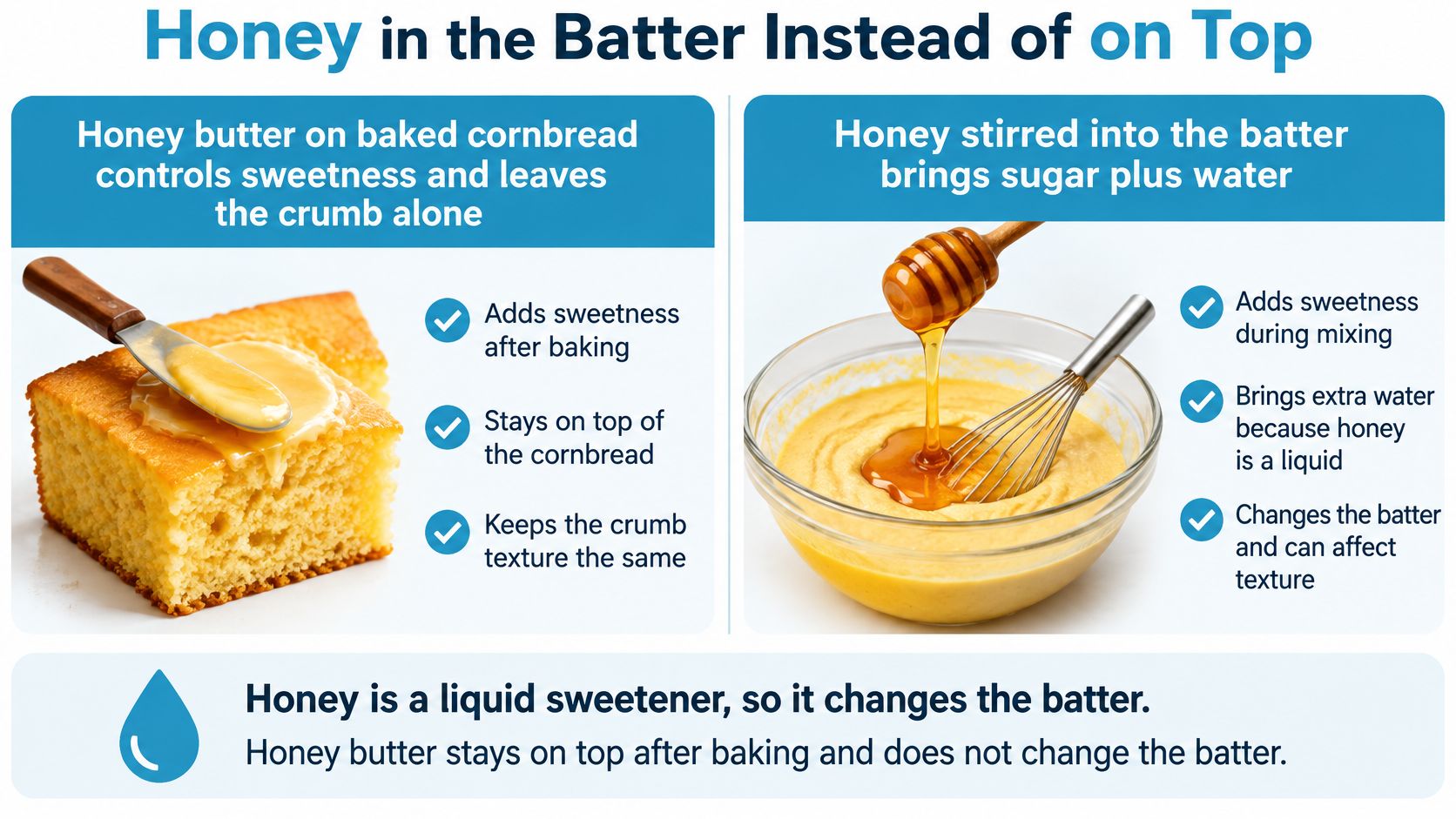
Honey butter on baked cornbread controls sweetness and leaves the crumb alone. Honey stirred into the batter brings sugar plus water. These are different jobs, even when the ingredients sound similar.
Honey contains about 17% water, and a direct substitution for granulated sugar can produce a wetter, denser crumb and excessive browning, as explained in the Raw Honey Guide's baking guidance. A finishing spread doesn't require you to rebalance the batter because you add it after baking.
Use this distinction when deciding whether to change your recipe.
Adjust a batter deliberately
The National Honey Board's substitution guidance recommends starting by replacing no more than half the granulated sugar; its baking adjustments call for lowering the oven temperature by 25°F, reducing other liquid by 1/4 cup for each cup of honey, and adding 1/2 teaspoon baking soda for each cup of honey.
Keep those quantities attached to their proper scale:
- Liquid adjustment: Reduce another liquid in proportion to the honey you add. Don't remove the full amount intended for a cup of honey when you're using only a little.
- Baking soda: Account for the recipe's existing leavening rather than adding an unmeasured extra pinch.
- Oven temperature: The temperature reduction is a general baking recommendation to limit overbrowning, not a quantity to multiply or divide like an ingredient.
For a family recipe using just a few tablespoons of honey, don't apply the full-cup ingredient adjustments automatically. A recipe already developed with honey is the simpler choice when you don't want to test substitutions.
Choose the result you want
Keep honey in the topping when you want a neutral or crisp-edged cornbread and sweetness each person can control. Put honey in the batter when you want its flavor throughout the crumb and are prepared to watch the crust.
A spread recipe isn't a batter substitution. Pouring prepared honey butter into the bowl changes both the fat and the liquid sweetener.
Gentle mixing still matters. If you tend to stir until every lump disappears, Mise's explanation can help you master the folding technique in baking and combine wet and dry ingredients without unnecessary beating.
Serve the Pan and Finish Strong
Set warm cornbread squares on the table with a small bowl of chilled honey butter and a spreading knife. A separate spread lets each person choose how much sweetness to add, whether the pan is served with breakfast or alongside chili.
For classic skillet cornbread, start with sage honey for its gentle floral flavor. Choose orange blossom when you want a smooth, silky honey with a citrus note.
Choose a format you'll use
A 1 lb jar suits repeated pans, a 3 lb jar works for a household that bakes often, and a 12 oz squeeze honey bear makes measuring honey into the butter bowl convenient. Blackberry, cactus, and Brazilian wildflower honeys come in jars.
For another bread pairing, this guide to honey and bread offers ideas for matching honey with a loaf. Topanga Quality Honey is a family-owned California beekeeping company, and its honey is packed in California.
Keep the spread separate from the batter, then serve it on the side. Start with a modest smear, taste it with the whole meal, and add more if you want a sweeter bite.
For your next pan, try sage honey for a gentle, floral spread, or visit Topanga Quality Honey to find raw, unfiltered, organic, kosher honey. Do not feed honey to infants under 12 months old.