

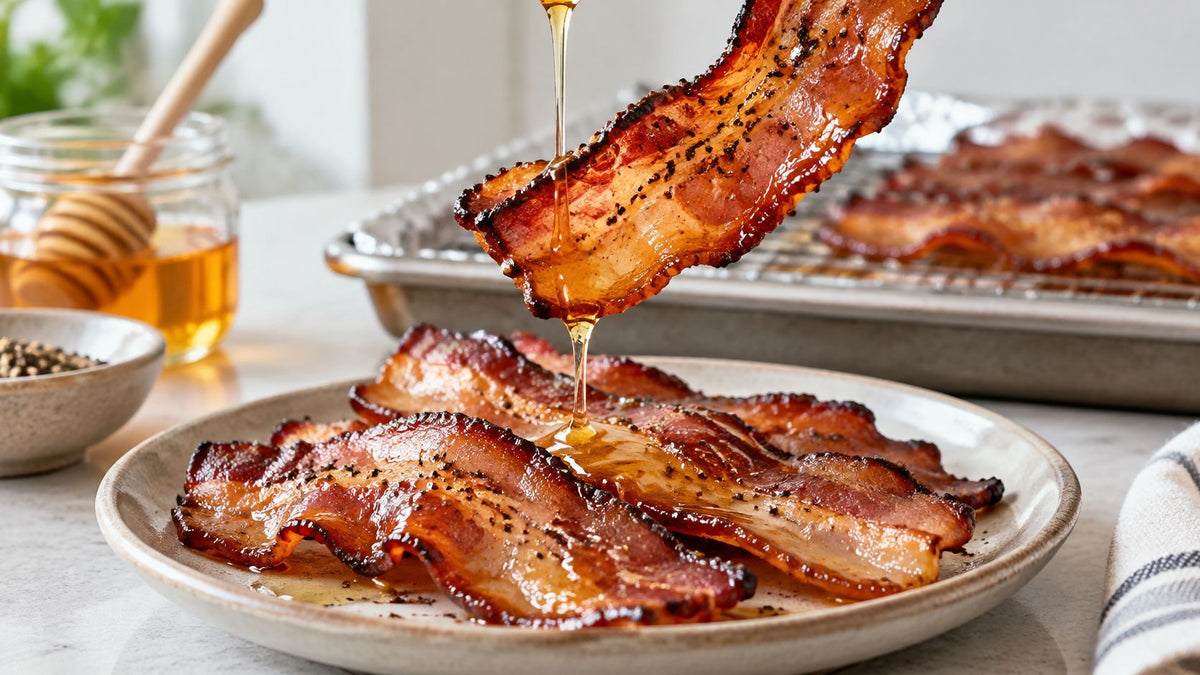
Bacon and Honey Recipe: How to Make Glazed Bacon at Home
You've got bacon in the refrigerator and a jar of honey on the counter, and breakfast could use something better than another plain strip. The temptation is to coat the bacon generously and slide it into a hot oven. That's also how you get blackened sugar over bacon that still hasn't rendered.
The better approach is simple: cook the bacon first, then use honey as a finishing glaze. You'll get crisp edges, a meaty center and a light coating that tastes like honey rather than burnt candy.
Table of Contents
- Honey-Glazed Bacon Ingredients and Amounts
- Choosing a Honey by Flavor for Bacon
- How to Glaze Bacon in the Oven
- Fixing Burnt, Soggy or Runny Glazes
- Serving Bacon and Honey Beyond the Plate
- Feeding Babies and Sharing Honey Foods Safely
- Stock Up on Honey for Your Next Batch
Honey-Glazed Bacon Ingredients and Amounts
For this batch, use one pound of thick-cut bacon, two tablespoons of raw honey, black pepper and an optional pinch of cayenne. It serves four as a side and takes about 25 minutes from oven to plate, with a preheated oven. Allow extra time if your bacon is especially thick.
Honey-glazed bacon ingredients
| Ingredient | Amount | Weight or Note |
|---|---|---|
| Thick-cut bacon | 1 lb | Usually 8 to 10 thick slices |
| Raw honey | 2 tbsp | About 42 g |
| Black pepper | 1/4 tsp | To taste |
| Cayenne pepper, optional | 1/8 tsp | Adds gentle heat |
The honey amount is deliberately modest. You're brushing the surface, not soaking the bacon, and you don't need brown sugar to make the glaze cling.
Measuring Honey Without the Mess
For spoon-to-scale measuring, 1 teaspoon of honey is about 7 g, 1 tablespoon is about 21 g, and 2 tablespoons is about 42 g. A 1/4 cup is about 84 g, useful if you're scaling the recipe for a larger breakfast.
Set a small bowl on your kitchen scale, zero it and pour the honey directly into it. That saves scraping a sticky measuring spoon, and you can mix the pepper into the same bowl.
Thick-cut bacon works better here because it holds a glaze while staying meaty in the middle. Thin slices can become brittle before the honey has time to settle into an even coating.
Practical rule: Start with less glaze than you think you need. You can brush another light coat onto bacon, but you can't remove a puddle once it starts burning.
Before starting, set out a foil-lined rimmed sheet pan, an oven-safe wire rack that fits inside it, tongs, a pastry brush and a small bowl. Use a rack intended for oven cooking, not a coated cooling rack of uncertain heat tolerance. Keep the bacon refrigerated until you're ready to arrange it.
Choosing a Honey by Flavor for Bacon
Light-colored honeys generally taste milder, while dark-colored honeys generally taste stronger, according to the BJCP floral-source guide, which also describes how the blossoms bees visit affect honey's color and flavor. That's a useful starting point, not a reason to assume every dark honey tastes alike.
Choose for the finished dish. Mild honey suits breakfast bacon that should still taste mainly of pork, while a fuller-flavored honey can stand beside smoke, pepper and mustard.
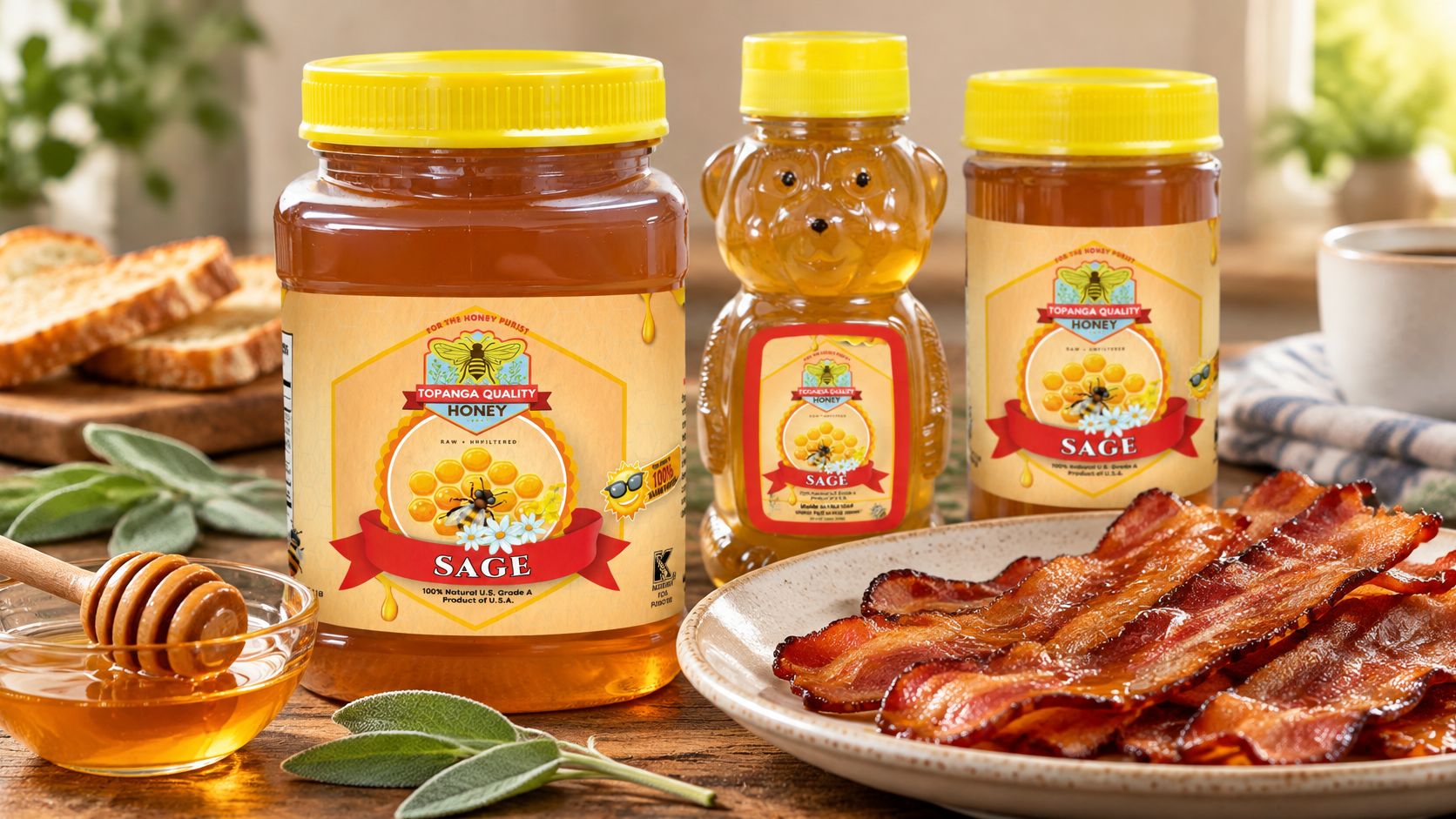
Match the Honey to the Seasoning
Honey varieties for bacon
| Honey | Color and Flavor | Best Use With Bacon |
|---|---|---|
| Raw Sage Honey | Light, heavy-bodied and mild | Breakfast bacon where the meat leads |
| Raw Orange Blossom Honey | Light, mild and lightly citrusy | Bright glaze for pork-forward dishes |
| Raw Avocado Honey | Rich and buttery with a floral aftertaste | Deeper glaze with black pepper |
| Raw Buckwheat Honey | Darker and generally stronger | Bold savory glaze |
| Eucalyptus Honey | Tends toward a stronger flavor | Assertive glaze for smoky or spiced bacon |
Sage is a sensible first choice when you're cooking for people with different tastes. Its mild character adds sweetness without making the glaze the loudest part of breakfast.
Orange blossom works well when you want a brighter impression without adding juice to the glaze. Avocado suits a generous grinding of pepper, while buckwheat makes more sense alongside a savory sandwich than beside an already sweet breakfast.
With eucalyptus, taste before committing the whole batch. Strong honey and heavily smoked bacon can make a good pairing, but you may prefer less glaze when both ingredients are assertive.
Taste Before Adding Heat
Compare a small taste of each honey at room temperature before mixing in pepper. Our guide to how to taste honey helps you separate sweetness from floral, herbal and deeper flavors.
If you're undecided, start with sage or orange blossom. For a broader comparison, use the honey varieties guide to choose by flavor rather than color alone.
How to Glaze Bacon in the Oven
Get the bacon most of the way cooked before opening the honey jar. The glaze needs a hot surface and a short finish, not the entire cooking time.
The process below gives you checkpoints rather than a promise that every package will cook identically. Slice thickness, starting temperature and oven hot spots all affect when the bacon is ready for its glaze.
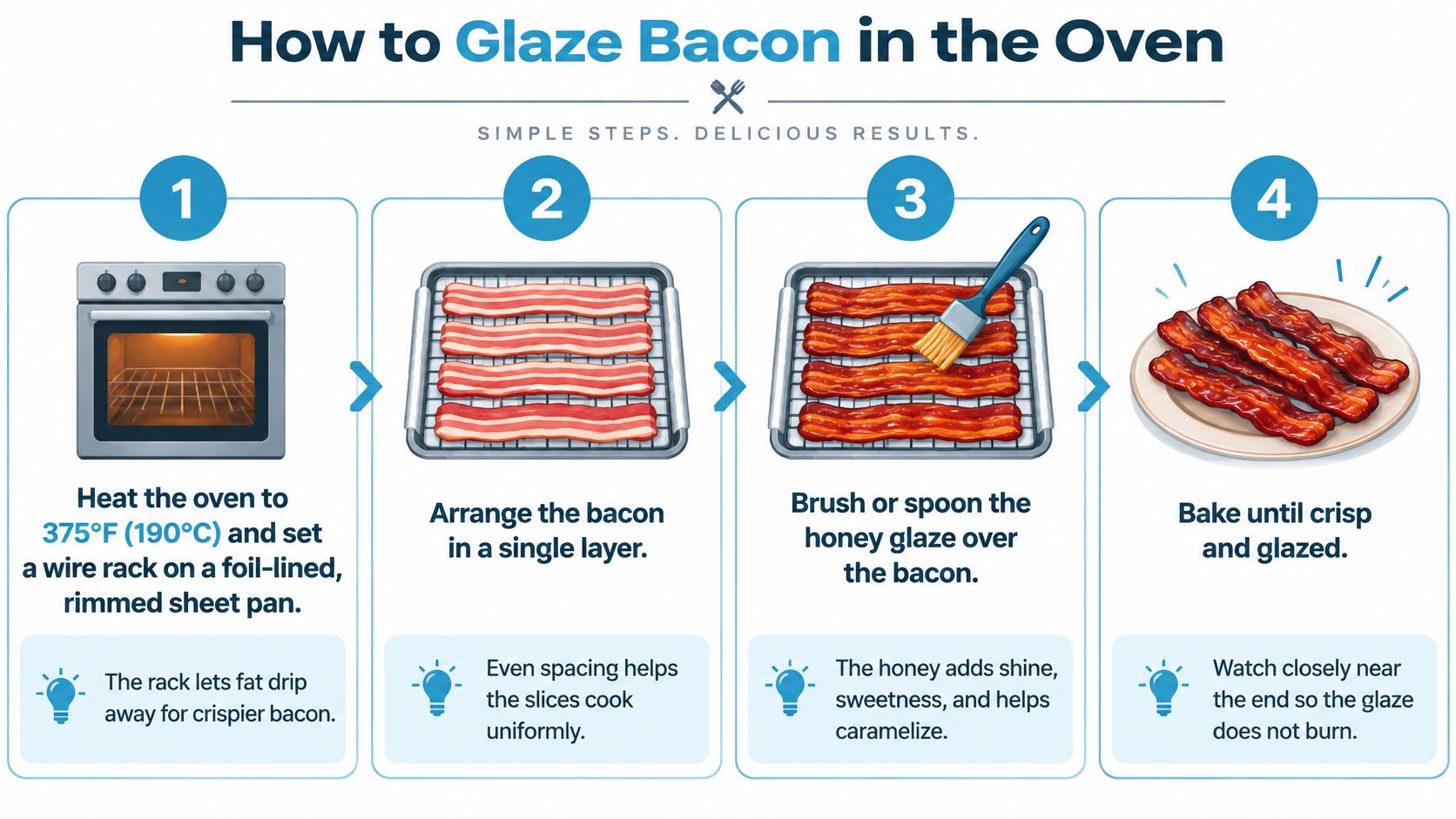
Render First, Glaze Last
- Heat the oven to 375°F (190°C). Set an oven-safe wire rack on a foil-lined, rimmed sheet pan. The rack lets fat drip away, while the rim contains the grease that a flat baking sheet can't safely hold.
- Arrange the refrigerated bacon in a single layer without overlapping the slices. Leave space between them so they cook evenly, and use another pan rather than folding extra bacon into the gaps.
- Bake for 12 to 15 minutes, until the fat has rendered and the slices are partly crisp. If one end of the pan browns faster, rotate it; if the bacon still looks soft and fatty throughout, give it more unglazed cooking time.
- Warm the measured honey for a few seconds if it's too thick to spread, then stir in the black pepper and optional cayenne. It should flow from the brush without being hot or bubbling.
- Brush a thin first coat over the upper surface of each slice and bake for 4 minutes more. Aim for a sheen, not a ridge of honey, because excess glaze runs into the pan instead of staying on the bacon.
- Apply a light second coat and bake for 2 to 4 minutes, watching closely until the glaze bubbles and the edges are crisp but not charred. Pull individual slices early if they finish ahead of the others rather than waiting for the whole pan.
- Transfer the bacon with tongs to a clean rack and rest for 2 to 3 minutes. Separating the slices while warm keeps them from sticking together as the coating sets.
Watch the Edges Without Relying on Color Alone
Crisp edges and a bubbling glaze help you judge texture, but pink color alone doesn't tell you whether bacon is cooked. The USDA's bacon safety guidance explains that curing agents can keep cooked bacon pink and that thin slices are difficult to measure accurately with a thermometer. Follow the package's cooking directions and don't treat browning as a stand-alone safety test.
For a different cut and cooking method, Smokey Rebel's pork belly BBQ guide is a useful companion for working with pork belly strips. Don't transfer the bacon timing directly to thicker belly pieces, which need a different rendering schedule.
Fixing Burnt, Soggy or Runny Glazes
Honey can go from glossy to bitter in a short stretch of oven time. Thin edges and spots where glaze pools scorch first, so pull the bacon as soon as the coating bubbles and the edges crisp.
A black, bitter coating cannot be repaired with more honey. Remove badly burnt pieces. For the next batch, adjust the heat or the time the glaze spends in the oven.
Glaze symptoms, causes and fixes
| Symptom | Likely Cause | Fix |
|---|---|---|
| Black, bitter glaze | Honey added too early or oven too hot | Lower the oven to 350°F and brush on the glaze only during the last 5 minutes |
| Soggy, pale bacon | Grease left on the surface | Let the bacon render further before glazing, then carefully blot visible grease with a folded paper towel held in tongs |
| Glaze runs into the pan | Excess honey | Follow the thin-coat method in the glazing steps above |
| Tacky glaze that won't set | Bacon rested on the hot pan | Transfer it to a clean rack and cool for 2 to 3 minutes |
| Honey too thick to brush | Natural crystallization | Set the jar in warm, not boiling, water |
Fix the Cause, Not Just the Appearance
If the bacon is pale and floppy, leave the honey off while it renders further. Glaze clings poorly to an oily surface, so blot visible grease before brushing.
A little stickiness is normal for a honey-only glaze. Baking longer to force a hard candy shell can scorch the coating after the bacon is ready. A thin, slightly tacky layer is preferable to a thick coating that turns bitter.
Crystallized honey is still fine to use, as the USDA honey specification explains. Honey's tendency to crystallize depends on its sugar composition and storage conditions.
Test the correction on a small batch. Change one variable at a time, such as oven temperature or glaze thickness, so you can identify which adjustment helps.
Serving Bacon and Honey Beyond the Plate
Bacon and honey work best when the rest of the dish gives the sweetness somewhere to go. Tart apples, mustard, vinegar and bitter greens keep the combination from tasting heavy.
Use the glazed bacon as an accent rather than automatically adding another drizzle of honey. Taste the assembled dish first, especially when pancakes, baked beans or bread already contribute sweetness.
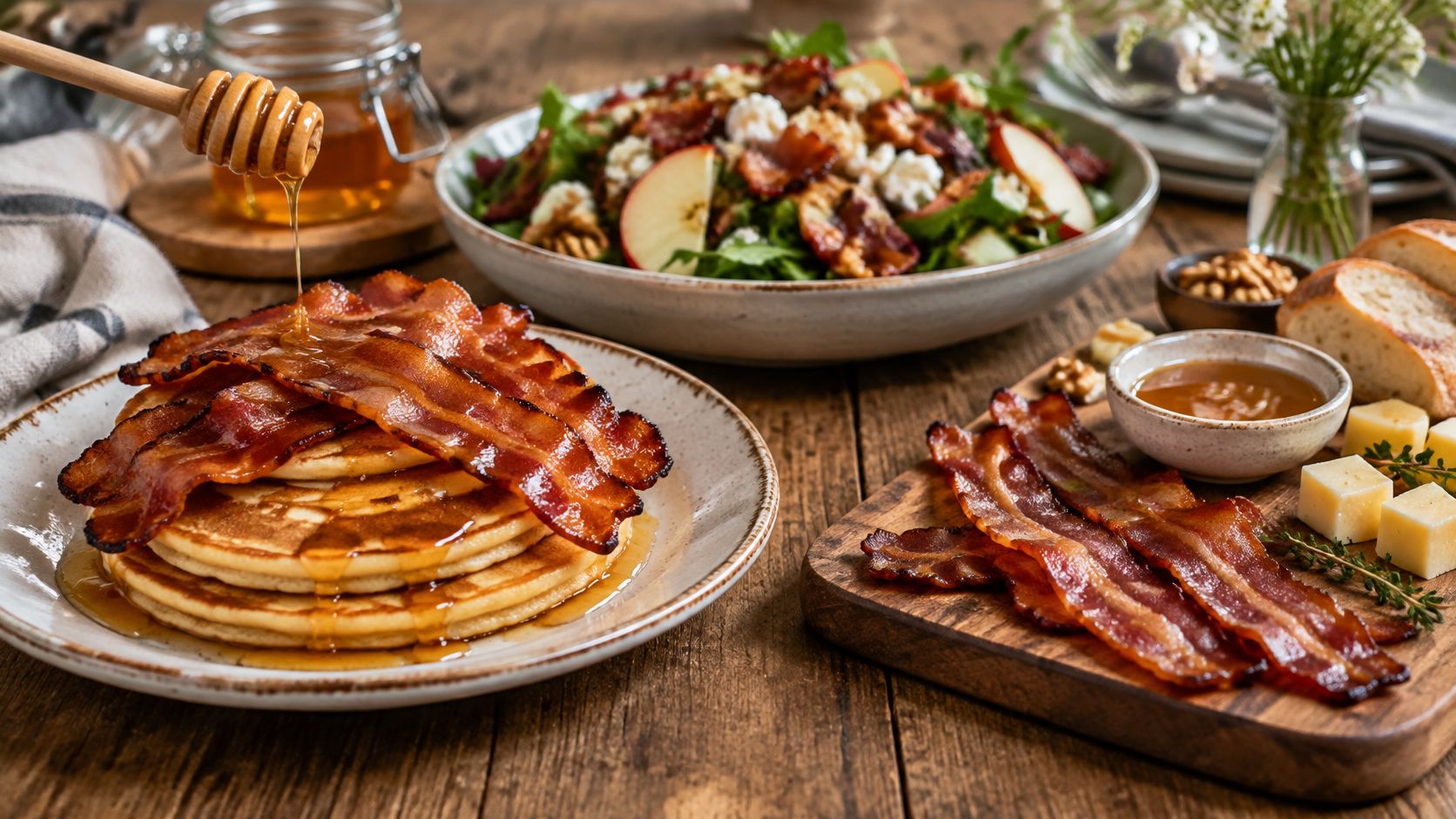
- Pancakes or waffles: Spoon chopped glazed bacon over the top so its coating supplies sweetness without drowning the crisp edges in syrup.
- Apple and walnut salad: Crumble it over sharp greens, where honey rounds out the bitterness and tart fruit.
- Mustard sandwich: Add a few slices with a thin spread of mustard for a sweet-sharp contrast.
- Baked beans: Stir crumbled bacon in near the end so the glaze seasons the beans without a long second cooking.
Warm Bacon-Honey Vinaigrette
For a reusable dressing, whisk together:
- Reserved bacon fat: 3 tablespoons, warm rather than sizzling.
- Cider vinegar: 2 tablespoons.
- Raw honey: 1 tablespoon, about 21 g.
- Salt: A pinch, added after tasting.
Take the pan off the heat, whisk the vinegar into the warm fat, then add the honey gradually while whisking. Taste before salting, since the bacon fat may already contribute enough.
Honey is a finishing sweetener, not the cooking medium here, so don't boil the dressing. If it separates, whisk again just before spooning it over roasted Brussels sprouts or shredded cabbage; the sweet-sharp balance suits both.
Reserve any honey intended for a finishing drizzle before your brush touches raw bacon. The USDA's cooking-safety advice reinforces keeping safe handling separate from appearance, so use clean utensils for the finished food. Refrigerate leftover bacon within two hours rather than leaving it on the breakfast table.
Feeding Babies and Sharing Honey Foods Safely
Children under 12 months shouldn't receive honey or honey-containing foods, as explained in the USDA's botulism guidance. Honey can carry dormant Clostridium botulinum spores, and ordinary baking, frying or glazing doesn't reliably eliminate them.
That means cooked honey-glazed bacon isn't an exception. The restriction also covers honey-containing sauces and baked goods, not just honey straight from the jar.
Keep Baby Food Separate
- Separate utensils: Don't use the glaze spoon or serving tongs for an infant's food.
- Separate plates: Keep honey-coated bacon and its sticky crumbs away from the baby's meal.
- Clean surfaces: Wash hands, counters and utensils before preparing or handling baby food.
Set aside suitable baby food before glazing or assembling the shared meal. That's simpler than trying to remove a coating after food has touched honey.
For the family table: Cooking changes the glaze's texture. It doesn't remove the infant restriction.
Keep Flavor Claims Separate From Health Claims
For adults and older children, honey adds sweetness, but it doesn't turn bacon into a different kind of food. Bacon remains processed meat with salt and fat, and honey added as a glaze contributes added sugar.
The CDC's guidance on foods to avoid or limit supports paying attention to added sugars in young children's diets. Serve glazed bacon occasionally alongside vegetables or beans, and compare sugar and sodium on the labels rather than calling the dish healthy.
Our tips for choosing honey for children and adults with different needs offer more help when planning a shared household pantry.
Stock Up on Honey for Your Next Batch
For bacon that stays in front, choose a gentler honey such as sage or orange blossom. Avocado honey brings a richer, buttery flavor, and it works in baking, coffee, over roasted vegetables, or with aged cheddar and blue cheese.
Topanga Quality Honey is a family-owned California beekeeping company. Its honey is raw, unfiltered, organic and kosher, and packed in California.
Choose a Format You'll Use
For regular cooking, choose a 1 lb or 3 lb jar, or a 12 oz or 24 oz honey bear. Gift sets offer another way to stock up: the Honey Gift Set includes three 12 oz honey bears for $59.65, with any three honeys available as swaps. For larger quantities, the Buckwheat & Blackberry Gift Set includes two 3 lb jars for $64.68, with any two honeys available as swaps.
Keep the container closed between uses and measure with clean utensils. Follow this guide to storing honey correctly for long-lasting flavor and freshness for everyday pantry care.
Topanga Quality Honey offers floral varieties for mild glazes and deeper, more pronounced flavors. Choose avocado honey for bacon, then use the remainder in roasted vegetables or baking. Do not feed honey to infants under 12 months old.