


Rosh Hashanah Honey: Meaning, Customs and Serving Ideas
A bowl of sliced apples, a dish of honey, and a loaf of challah are ready for the holiday meal, but the honey has turned thick and one of your guests is bringing a baby. Rosh Hashanah honey is more than a flavor for the table. Understanding its symbolism, choosing a texture that's easy to serve, and planning for every guest can make the custom both meaningful and practical.
Table of Contents
- Why Honey Stands for a Sweet New Year
- Sweet Traditions Across Jewish Communities
- Choosing Honey That Holds Up on Holiday Day
- Serving Ideas That Match Each Honey
- How to Set Out Honey for the Holiday Table
- Serving Honey Safely to Every Guest
- Plan Your Sweet New Year Table
Why Honey Stands for a Sweet New Year
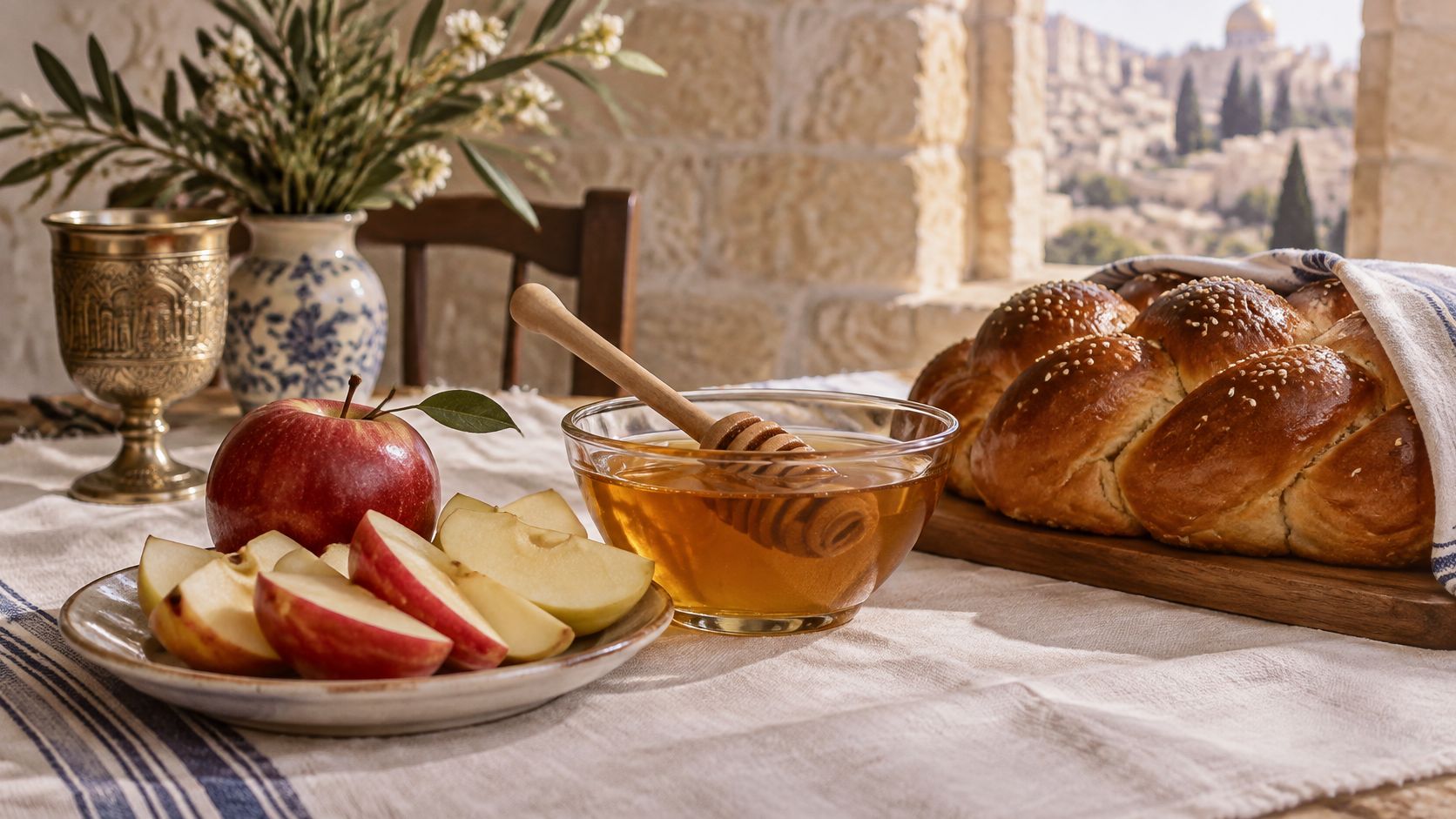
Honey does two jobs on Rosh Hashanah: it carries a wish, and it gives guests something simple to do with that wish. When someone tears challah or lifts an apple slice and dips it, the table is saying Shanah tovah umetukah, “a good and sweet year,” in a language everyone understands. The University of Basel's account of Jewish sweet traditions traces this kind of sweet-symbolic eating back more than a thousand years.
The custom also explains why small serving choices matter. A wish works best when it is easy to reach: pourable honey for apple slices, a spoon or dipper for challah, and a dish set where guests can take it without asking. Once the meaning is clear, texture, placement, and safety become part of the same gesture, because they decide whether the symbol survives a real meal.
The apple pairing has a clear logic. The Orthodox Union's explanation of the Rosh Hashanah custom notes that the practice is codified in Shulchan Aruch, Orach Chayim 583:3, and describes how the Maharil connected the apple to Isaac's blessing to Jacob in Genesis 27:27, reading the “fragrance of the field” as the scent of apple orchards.
For the apple custom, take a piece of apple, dip it in honey, recite the appropriate blessing, and express the hope for a good, sweet year.
Sweet Traditions Across Jewish Communities
The wish for sweetness stays the same from table to table; the food that carries it changes with place and history.
| Community or Custom | Traditional Sweet Food | Historical Note |
|---|---|---|
| Ashkenazi communities | Apples dipped in bee honey | The pairing that became the best-known version of the honey custom |
| Sephardic and Middle Eastern communities | Dates or date syrup | Dates were widely grown in the ancient Near East, so their syrup could carry the same wish |
| Early Jewish sources | Bread dipped in honey | The "honey" named in these texts could be syrup pressed from dates, figs, grapes, or raisins |
| Many families today | Challah with honey | Bee honey is served with challah alongside apples and other symbolic foods |
The word honey can cause confusion when readers move between biblical passages and today's table. In biblical and early Jewish contexts, it could mean a thick syrup made from dates, figs, grapes, or raisins, rather than liquid honey produced by bees. The familiar image of a land flowing with "milk and honey" therefore doesn't always refer to bee honey. The Jewish Journal's discussion of Rosh Hashanah honey traditions explains how date syrup and other regional sweet foods fit into this history.
That difference makes sense on the map. Dates were widely grown in the ancient Near East, while beekeeping and liquid bee honey were more geographically limited. Communities reached for the sweetest food their own region offered, and a table set with dates or date syrup expresses the same hope as one set with bee honey.
The food can change while the hope stays recognizable. Honey with challah isn't limited to the apple custom or to one region, and families may arrange other symbolic foods alongside it. Apples, dates, pomegranates, leeks, and other foods can all appear at a Rosh Hashanah meal.
For your own table, there is room for both. If your family dips apples in bee honey, you're following the best-known honey custom; if you serve dates or date syrup, that sweetness wish still belongs, and a small dish of bee honey can sit beside them so guests recognize the symbol at a glance.
Choosing Honey That Holds Up on Holiday Day
For apple dipping, reach for a jar of strained, liquid honey. It pours smoothly into a small serving bowl, and guests can dip apple wedges without wrestling a stiff or comb-filled container.
Raw honey can crystallize naturally, and a grainy or cloudy texture does not mean it has spoiled. If a jar sets before the holiday, stand it in warm, not boiling, water until the honey softens. Gentle heat is enough to bring it back.
Raw and unfiltered describe how the honey was processed, not a promise about texture or purity. Raw honey has not been pasteurized, while unfiltered honey has not been pushed through ultra-fine filters. Rawness alone does not prove purity or superior nutrition, and visible particles are not proof of authenticity either.
An older retail survey helps explain why shoppers ask these questions. Hadassah Magazine's guide to buying honey for Rosh Hashanah reported that pollen had been removed from 76% of grocery-store samples and 77% of large-chain samples. The figures describe what testing found in those samples; they do not establish whether any particular jar on a shelf today is authentic.
For a clear choice, read the label for who produced the honey, its floral source and geographic origin, its processing language, lot information, and kosher certification. Floral source and geographic origin are distinct from packing location. A jar marked “packed in California” tells you where the honey was packed, not where the bees gathered nectar.
| Format | Sizes or Packs | Best Use at the Table |
|---|---|---|
| Varietal jar | Single jars across varieties such as sage, avocado, orange blossom and California wildflower | Dipping apples and spreading on challah |
| Squeeze honey bear | 12 oz | Quick refills and fewer shared spoons |
| Honey sticks | Orange blossom, California wildflower or pomegranate, listed from $41.81 | Single servings for guests |
| Raw Honeycomb, 1 lb | 1 lb | Cheese boards and warm toast |
| Honeycomb square | 11 oz, packed in its own box | Easy-to-serve portions for cheese boards |
| Gift set | Tasting sets of two or three honeys; the 3 x 12 oz honey bear set costs $59.65, with any three honeys available as swaps | Hosts and teachers, or comparing light and dark honeys side by side |
Honeycomb needs a little more planning than a pourable jar. Decide before the holiday how you will serve it, and check the timing with your own halachic authority. The Orthodox Union notes that clear unfiltered honey generally undergoes basic refining and is typically acceptable without further filtration, while visible particles, opaque honey, and extracting honey from comb raise additional practical or halachic considerations on Shabbat or Yom Tov.
Serving Ideas That Match Each Honey
Every dish on the holiday table has a honey that suits it.
| Serving Idea | Honey to Reach For | Why It Works |
|---|---|---|
| Apple wedges for dipping | Raw Sage Honey | Pale gold and gently floral, so the apple leads |
| Challah or warm toast | Raw Orange Blossom Honey | Its fresh, sweet citrus aroma suits warm bread |
| Roasted carrots or squash | Raw Avocado Honey | Buttery, molasses and caramel notes add depth to a glaze |
| Gingerbread or dark cake | Raw Buckwheat Honey | Malty, molasses-like flavor stands up to dark baking |
| Cheese board | Raw Honeycomb, 1 lb | Chewable comb pairs well with sharp cheeses |
| Tea or coffee | Sage honey for tea, avocado honey for coffee | Sage keeps tea's flavor clean; avocado adds depth to coffee |
A helpful pairing rule is match the honey's intensity to the dish's intensity. Light honey works like a squeeze of lemon: it lifts whatever is already on the plate. A pale, gently floral honey lets an apple wedge or a cup of tea stay in the foreground, and orange blossom's citrus aroma makes a natural fit for challah and warm toast.
Dark honey works more like a spice, bringing a flavor of its own. Avocado honey is rich and buttery, with molasses and caramel notes; whisk a spoonful into a glaze for roasted carrots or squash, or serve it with aged cheddar or blue cheese. Buckwheat's malty, molasses-like character suits gingerbread and dark cakes.
Honeycomb brings texture as well as sweetness. Cut a piece for the cheese board, set it on warm toast, or enjoy a small piece on its own. If you want to build the board around the comb, the guide to building a fruit and cheese platter covers which cheeses and fruits to set beside it.
How to Set Out Honey for the Holiday Table
Set the honey where the dipping happens: apple plate in the center, honey just to the side, spoons within easy reach. If a jar has become grainy or too thick to dip neatly, handle it with the gentle approach covered earlier and keep high heat out of the setup.
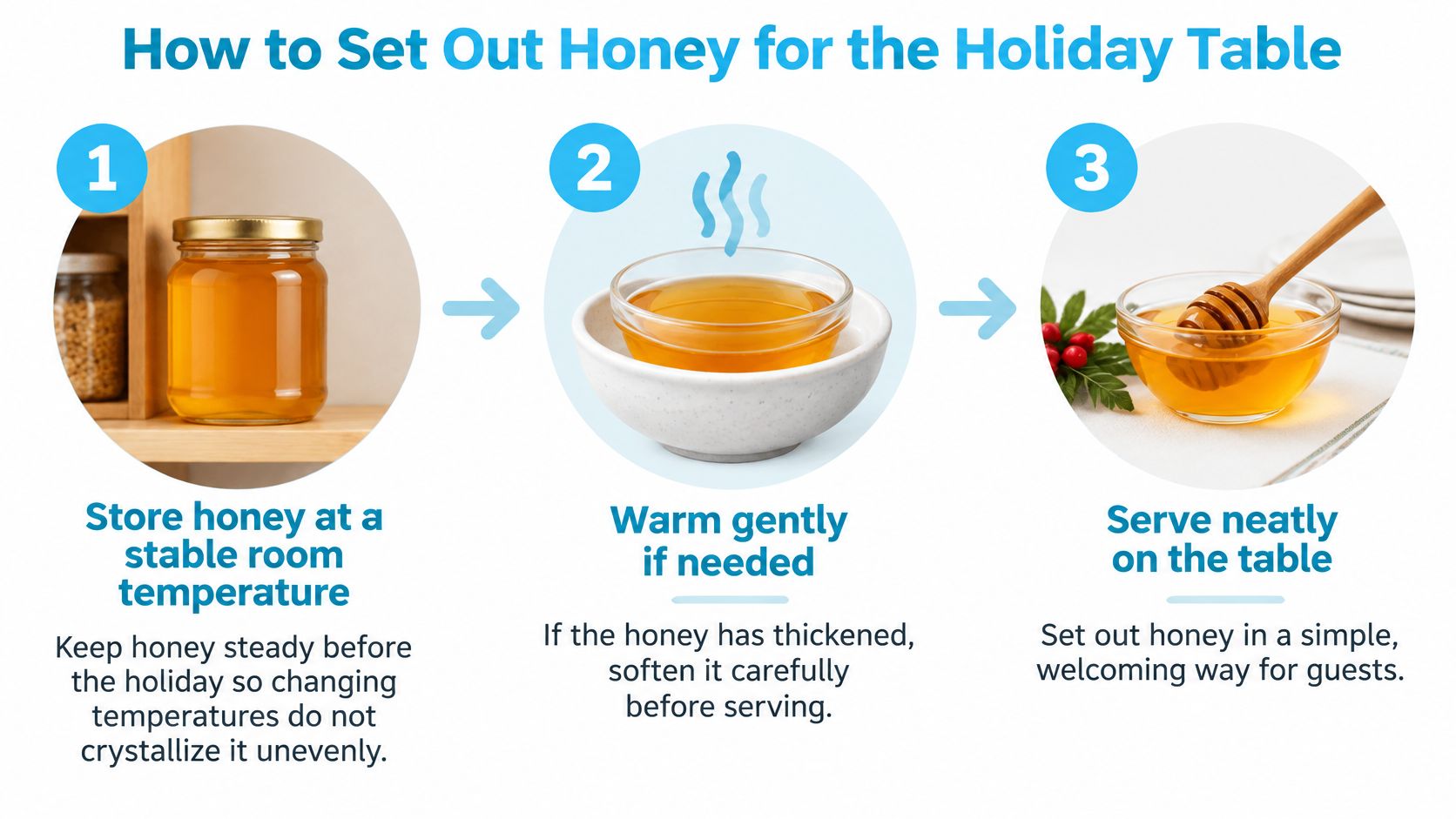
- Keep the storage jar closed until serving. Pour only what guests will use into a shallow dish shortly before the meal; a wide mouth gives apple wedges room to dip without scraping the sides.
- Match the vessel to the job. A small bowl works for apple slices, a squeeze bear limits shared-spoon contact, and a dipper suits thicker honey that should stay on the serving plate rather than be passed.
- Give every dish its own utensil. One spoon or dipper per bowl keeps flavors separate and reduces contact at a crowded table.
- Cut apples close to serving. Slice wedges no more than an hour ahead and cover them with a clean damp towel so they stay fresh on the plate.
- Place honey within a short reach. Keep it near the apples and challah, not at the far end of the table, and set a napkin or small plate underneath for drips.
When guests sit down, the table should read plainly: apples beside honey, each bowl with its own tool, and the storage jar sealed away from the traffic. For help picking a vessel that pours cleanly and looks at home on the table, see how to choose a glass honey jar and dipper.
Serving Honey Safely to Every Guest
Don't serve honey to children under 12 months old, even when it's raw, organic, kosher, or baked into food. Honey can contain Clostridium botulinum spores that may germinate in an infant's intestine. The Israeli Ministry of Health's Rosh Hashanah safety guidance says children may consume honey after reaching one year.
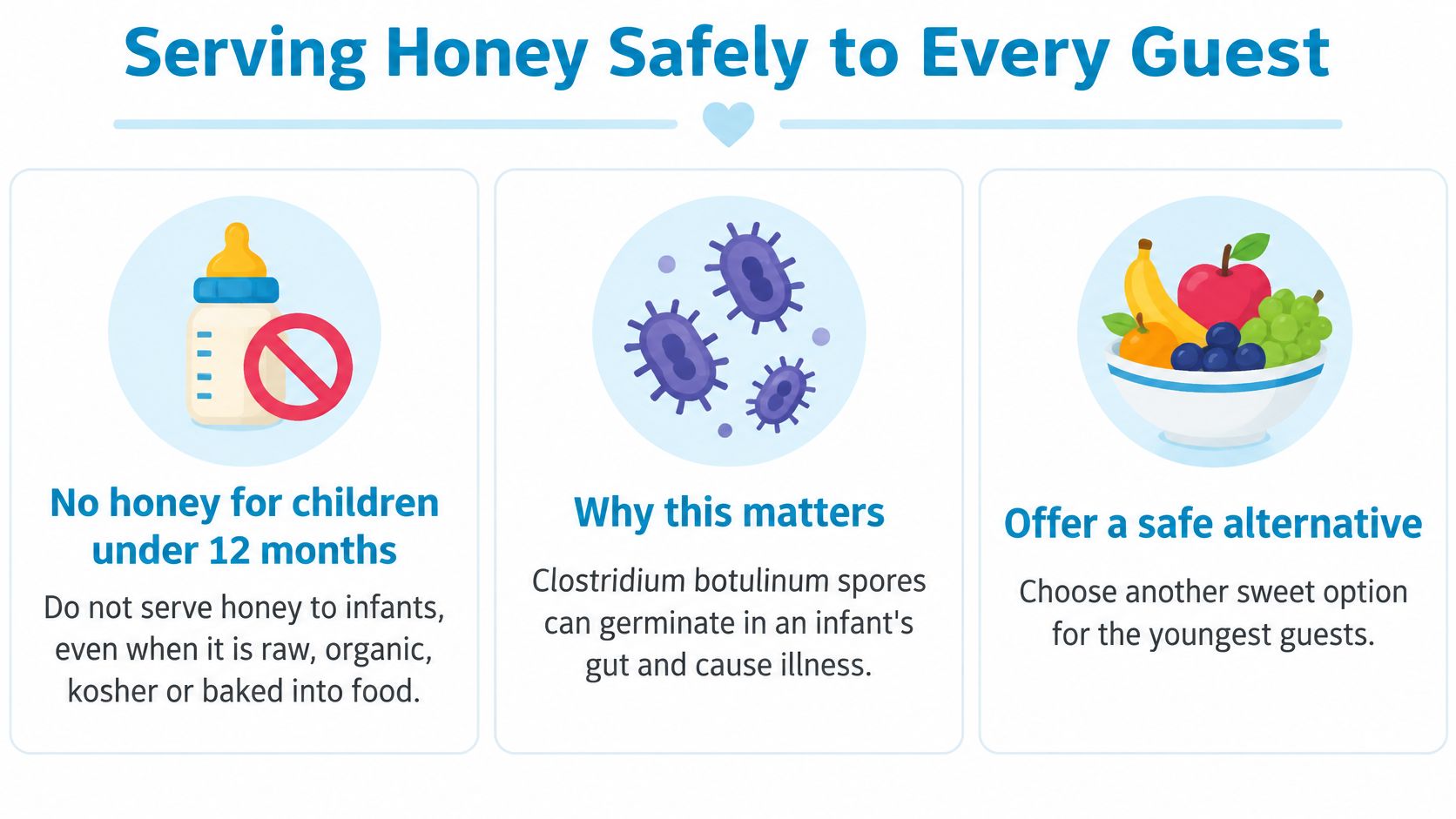
Keep honey away from an infant's utensils and pacifiers, and don't assume that baking it into food makes it safe for a baby. For a little one at the table, offer apple with date or maple instead, and keep that serving separate from the honey dishes.
For guests with diabetes, don't describe honey as a “healthy sugar” or assume that one variety is suitable. Honey is a concentrated sweetener, so portion size, total carbohydrate intake, and each person's medical plan matter. Ask about dietary needs before the meal and offer a small honey-free dish.
Use this quick checklist while setting the table:
- Label honey-containing dishes so guests know what they're serving.
- Keep baby food separate from honey and honey utensils.
- Set out an apple option without honey for the youngest guests.
- Plan portions and provide a honey-free choice.
- Ask guests about needs ahead of time, rather than leaving them to guess at the table.
For more practical ideas on different dietary needs, read tips for choosing honey for children and adults with different needs.
Plan Your Sweet New Year Table
Start with the apple plate. A light honey such as Raw Sage Honey pours pale gold, tastes gently floral, and stays liquid longer than most raw honeys, so it will still drizzle smoothly when dessert comes around. For challah baking or a savory glaze on roasted vegetables, choose a darker honey like avocado or buckwheat, which brings a deeper sweetness that holds up to heat. If you want a centerpiece guests can cut for themselves, a slab of honeycomb belongs on the cheese board.
Once the menu is set, the buying is simple. Topanga Quality Honey is a family-owned California beekeeping company, and every honey it sells is raw, unfiltered, organic, and kosher, with each jar packed in California. Gift sets group two or three varieties side by side, which makes them a fitting choice for a host or teacher. Orders of $50 or more ship free to the continental United States.
Set each honey out with its own small spoon so guests can taste without mixing flavors, and order your jars or a gift set at Topanga Quality Honey before the holiday.