

How to Make a Hot Honey Chicken Biscuit
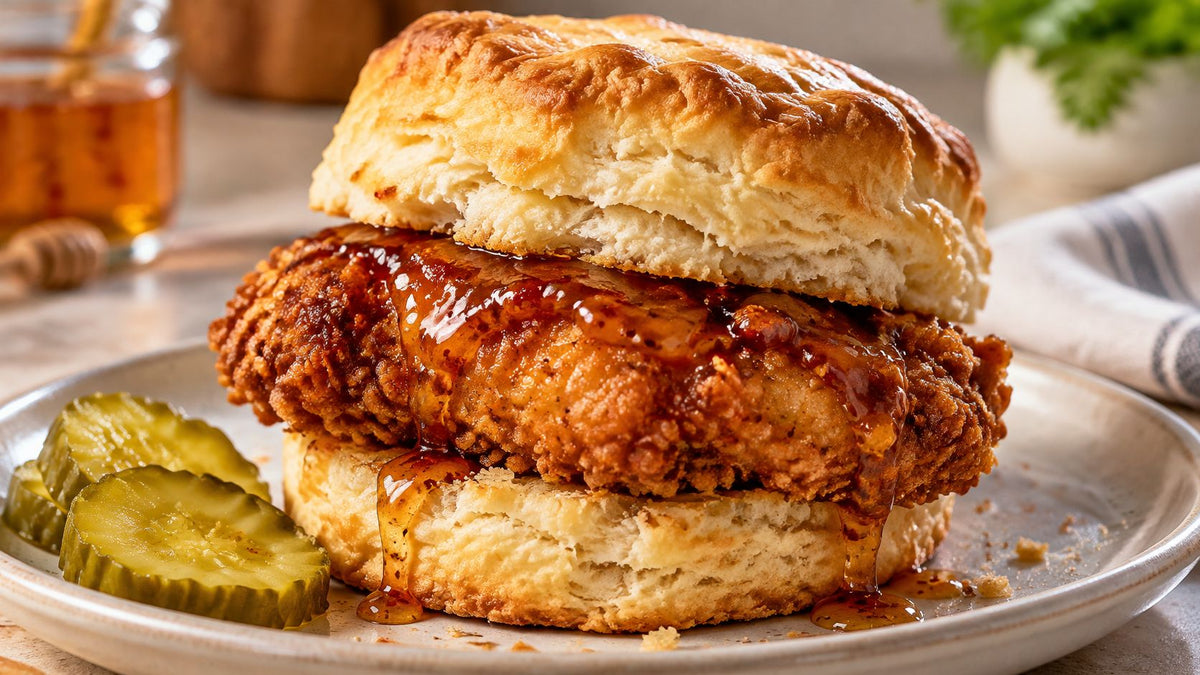
Saturday breakfast is underway, and someone at the table wants a diner-style chicken biscuit with a stripe of sweet heat. The sandwich is simple: a split biscuit, one piece of fully cooked chicken, and hot honey added only after the chicken leaves the heat.
The texture goal is crisp biscuit edges, a chicken crust that still snaps about five minutes after plating, and a narrow stripe of sauce instead of a soak. The order matters: mix and chill the biscuits while you season the chicken, cook the chicken until its thickest part reads 165°F (73.9°C), then warm the honey with chili just until it pours.
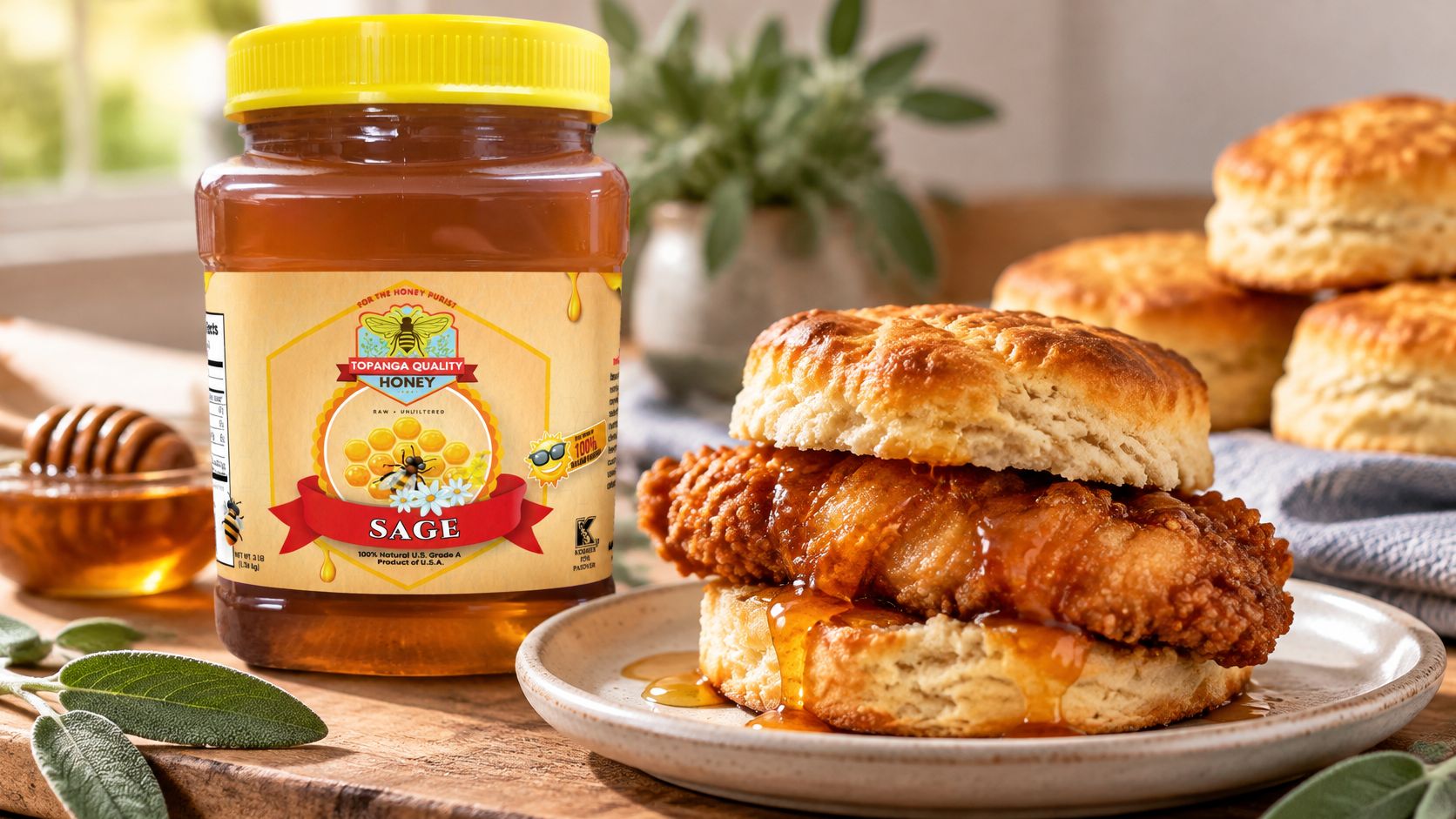
Topanga Quality Honey is a family-owned California beekeeping company. Our family keeps the bees, and our hives move with the seasons among orchards, farms, and wildflower ranges. All our honey is packed in California. The honey used here is raw, never pasteurized, unfiltered, organic, and kosher.
For a little more guidance on the biscuit side of breakfast, this buttermilk biscuit baking inspiration from DBakerAid™ can help you think through the texture you want. The portion chart below gives you a practical starting point for four sandwiches.
Table of Contents
- Amounts Times and Temperatures for Four Sandwiches
- Choose Honey Heat and When to Sauce
- How to Build the Biscuit Chicken and Glaze
- Fixes for Flat Biscuits and Soft Crusts
- Order the Honey Before the Next Batch
Amounts Times and Temperatures for Four Sandwiches
Read the chart before you turn on the oven. Weigh the flour and butter rather than measuring by volume, and keep both the butter and buttermilk cold. The dough should just hold together; extra mixing works the flour more and can make biscuits tough.
| Component | Amount or target | Rule |
|---|---|---|
| Biscuit flour, all-purpose | 240 g | Whisk with baking powder and salt |
| Baking powder | 1 tablespoon | Whisk before adding fat |
| Salt | 1 teaspoon | Whisk with the flour |
| Cold butter | 113 g | Keep cold; warm fat makes dense layers |
| Cold buttermilk | 180 g | Stop when the dough just holds |
| Optional dough honey | 1 tablespoon, about 21 g | Glaze still carries the main honey |
| Biscuit chill | 20 to 30 minutes after cutting | Restores lift before the oven |
| Bake | 425°F, upper rack, 15 to 20 min; 10 to 14 min if small | Dry center, about 1 inch apart |
| Chicken | 4 breast or thigh pieces, even thickness | Single layer; don't trust color |
| Breading flour and seasoning | 120 g flour, 1 teaspoon salt, ½ teaspoon black pepper | Even coat on every piece |
| Frying oil or bake setup | ½ inch neutral oil for shallow frying, or a lightly oiled rack over a pan | Single layer in the pan |
| Chicken doneness | 165°F (73.9°C) in the thickest part | Thermometer away from bone; check several pieces |
| Hot honey | 30 g honey, about 1½ tablespoons | Stripe after cooking; don't soak |
| Chili | 1 to 3 g by pepper strength | Adjust to the eater's heat level |
| Acid | Small splash of vinegar or pickle brine | Keeps the sweetness from tasting flat |
The biscuit timing follows professional guidance: standard biscuits take about 15 to 20 minutes, while smaller ones can finish in 10 to 14 minutes, according to the King Arthur Baking biscuit workbook. Treat those times as a check, not a guarantee. Biscuit size and your oven affect when the centers finish.
Pound the chicken pieces to an even thickness so one piece doesn't dry out while another is still cooking in the middle. Use a thermometer in the thickest part, away from bone, and check multiple pieces. Breaded chicken can look browned before it's cooked through.
Portion rule: Keep the honey amount steady and adjust the chili separately. That way, you can change the heat without making the glaze sweeter or heavier.
Choose Honey Heat and When to Sauce
Pick the honey before you start the biscuits. The glaze is where its flavor comes through most clearly, so the choice changes whether the chili leads, balances with the sweetness, or sits against a deeper honey note.
| Choice | Flavor on chicken | Use it when |
|---|---|---|
| Raw Sage Honey | Clean, gently floral; chili stays forward | You want mild breakfast heat |
| Raw Orange Blossom Honey | Light California citrus-blossom sweetness | You want balanced sweet heat |
| Raw Avocado Honey | Dark and rich, with depth for the crust | The crust needs more depth |
| Raw Buckwheat Honey | Malty, less sweet, bold | You want bold chili and a darker flavor |
California wildflower is a good middle choice if you want a balanced floral note. If you're comparing aromas and colors as well as taste, our guide to honey appearance, color, and aroma can help you make sense of those differences. For another perspective on hot honey as a finishing condiment, you can also browse hot honey online.
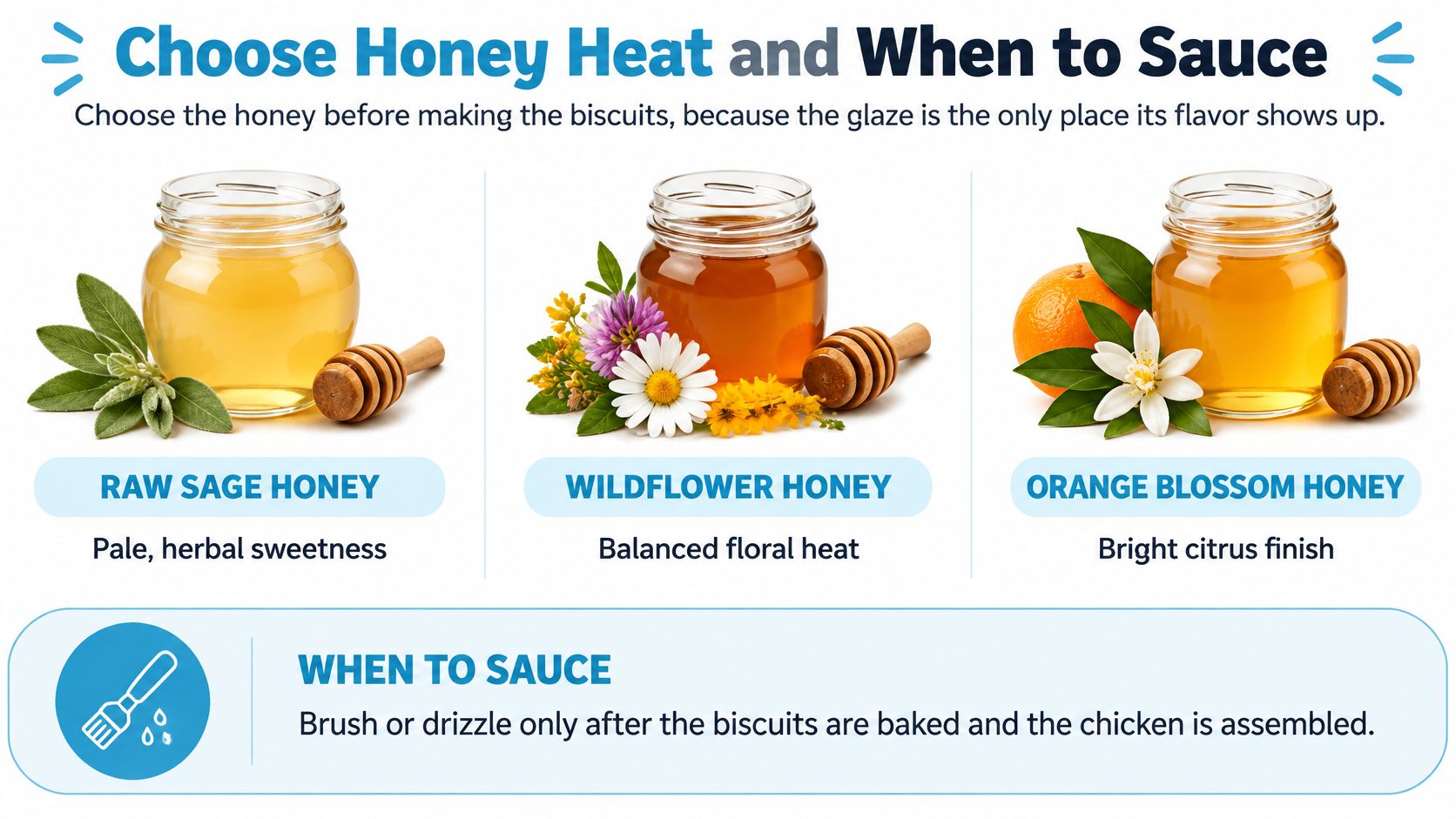
Use 30 g of honey for the glaze, then decide how much chili suits the people eating. About 1 g gives gentler warmth for children or spice-shy adults, 2 g makes the heat noticeable, and 3 g is best when the pepper is mild and the eater wants a real kick. Keep the honey constant so you're changing the heat, not the sweetness.
A neutral foodservice hot honey chicken biscuit bowl recipe offers the sauce drizzled over the warm chicken and biscuits or served on the side. For this sandwich, those options also help protect the biscuit: stripe the chicken at the table, serve a small cup for dipping, or use a thin coat and add pickles or slaw for a tart contrast. Keep sauce off the cut biscuit face until serving.
If the jar has crystallized, the honey is still good. Set the jar in warm, not boiling, water until the honey loosens, then weigh your portion. For more ways to use the mild floral flavor of Raw Sage Honey, try it on biscuits, yogurt, or fruit.
How to Build the Biscuit Chicken and Glaze
Keep the chart nearby and work through the steps in order. Cold biscuit ingredients help the dough rise into tender layers, while saucing the chicken after cooking keeps its coating crisper.
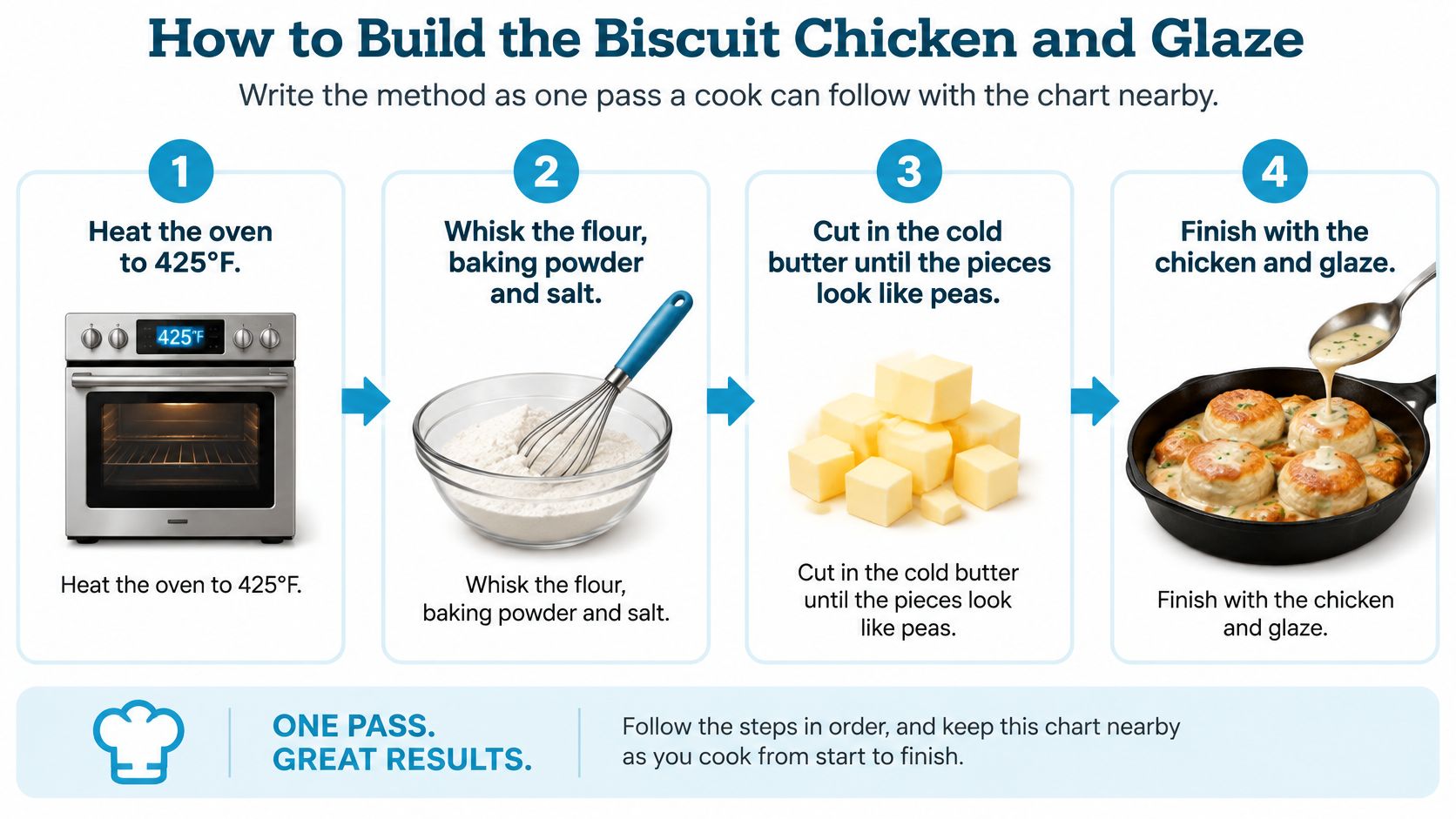
- Mix the biscuits. Heat the oven to 425°F. Whisk the flour, baking powder, and salt, then cut in the cold butter until the pieces are about the size of peas. Stir in the cold buttermilk and optional dough honey just until the dough holds together. Stop there; overworking it can make the biscuits dense.
- Shape and chill. Pat the dough and fold it once or twice to build layers, then cut four to eight biscuits. Place them about an inch apart for crisper sides, and chill them for 20 to 30 minutes so the butter firms before baking.
- Bake and cool. Bake on the upper rack until lightly browned and cooked through, using the chart's standard-biscuit timing as a guide. A clean, dry center matters more than color alone. Move the biscuits to a rack for a brief cool so steam doesn't make their bottoms soggy.
- Season and bread the chicken. Pat the chicken pieces dry, season them, and coat each piece evenly in the seasoned flour. Keep the pieces a similar thickness so they cook at a similar rate. Cook them in a single layer by shallow frying or on a lightly oiled rack over a pan; crowding can interfere with even cooking and a crisp coating.
- Check each piece. Use a calibrated food thermometer in the thickest part of the chicken, away from bone and fat. Check multiple pieces, because one can finish before another. Poultry must reach 165°F (73.9°C) before it leaves the heat, as the King Arthur Baking professional biscuit and chicken workflow also emphasizes. If a piece hasn't reached the safe temperature, keep cooking it.
- Warm the glaze gently. Take the chicken off the heat first. Warm the measured honey with the chili and a small splash of vinegar or pickle brine only until it becomes fluid, then brush or drizzle it over the chicken. Don't boil the honey or add it to the breading; it belongs on the cooked chicken as a measured finish.
- Assemble and serve. Drain the chicken briefly, split the biscuits, and set the chicken on the bottom half. Stripe the glaze over the chicken rather than the biscuit crumb, then close the sandwich and serve promptly. An open plate or vented serving setup lets steam escape better than a sealed container. For more ideas on pairing honey with a baked base, see our notes on honey and bread.
The cold-fat biscuit method and finishing glaze are practical parts of a two-stage workflow. The King Arthur Baking biscuit workbook also provides professional baking benchmarks; use the timing as a starting point and judge the actual biscuit by its center.
Fixes for Flat Biscuits and Soft Crusts
A flat biscuit or soft chicken crust can turn a promising breakfast into a heavy, soggy sandwich. Match the symptom to one change instead of adding more sauce or changing several things at once.
| Symptom | Likely cause | Fix |
|---|---|---|
| Dense biscuit | Warm butter or overworked dough | Use colder fat and chill for 20 to 30 minutes |
| Doughy center | Pulled early | Bake longer at 425°F until the center is dry |
| Greasy crust | Crowded pan | Cook in a single layer |
| Soft crust at the table | Sauce and steam soaking the crumb | Drain chicken and stripe or dip the glaze |
| Flat sweetness | No acid | Add vinegar or pickle brine, not more honey |
| Harsh heat | Too much chili for 30 g honey | Drop chili toward 1 g |
| Uneven doneness | Color used instead of a thermometer | Recheck the thickest part to 165°F |
Dense biscuits usually point to warm butter, too much handling, or a skipped chill. Keep the butter cold and stop mixing once the dough holds together. If the center is pale or doughy, give the biscuit more time in the oven rather than trying to cover the texture with honey.
Greasy chicken often means the pan was crowded, so leave room around each piece and cook in a single layer. A soft crust after assembly is a moisture problem: drain the chicken, put the glaze in a narrow stripe or dipping cup, and don't seal the sandwich while it's steaming.
A brown coating doesn't prove the middle is cooked. Measure the chicken.
The USDA guidance on checking poultry temperature says a food thermometer is the dependable way to confirm doneness; color and appearance alone aren't enough. Place the probe in the thickest part, away from bone and fat, and check more than one piece. Any chicken below 165°F needs to stay on the heat until it reaches that temperature.
If the glaze tastes flat, add a little acid instead of more honey. If the chili tastes harsh, reduce the chili and keep the honey amount the same. A simple batch check helps catch problems early: inspect one sandwich for biscuit height, safe chicken temperature, sauce portion, and whether the crust still snaps about five minutes after plating. For more ideas on baking with honey, read our guide to honey for baking.
Order the Honey Before the Next Batch
Choose the honey to match the sandwich you liked best. For a darker glaze that can stand alongside a crisp crust and stronger chili, raw avocado honey is a good fit in a 1 lb or 3 lb jar. If you prefer lighter breakfast heat, choose raw sage honey.
For a group that wants to drizzle without sharing a sticky spoon, sage honey sticks come in packs of 50 or 100. They can also be stirred into tea or drizzled over biscuits, yogurt, or fruit when you want sweetness without a strong honey flavor. To compare other varieties for your pantry, browse our raw honey collection.
Pick one honey, weigh 30 g for the glaze, and sauce the chicken only after it reaches 165°F (73.9°C). If you want to start with a lighter, gently floral finish, visit Topanga Quality Honey and choose a honey for your next batch.
Do not feed honey to infants under 12 months old.