

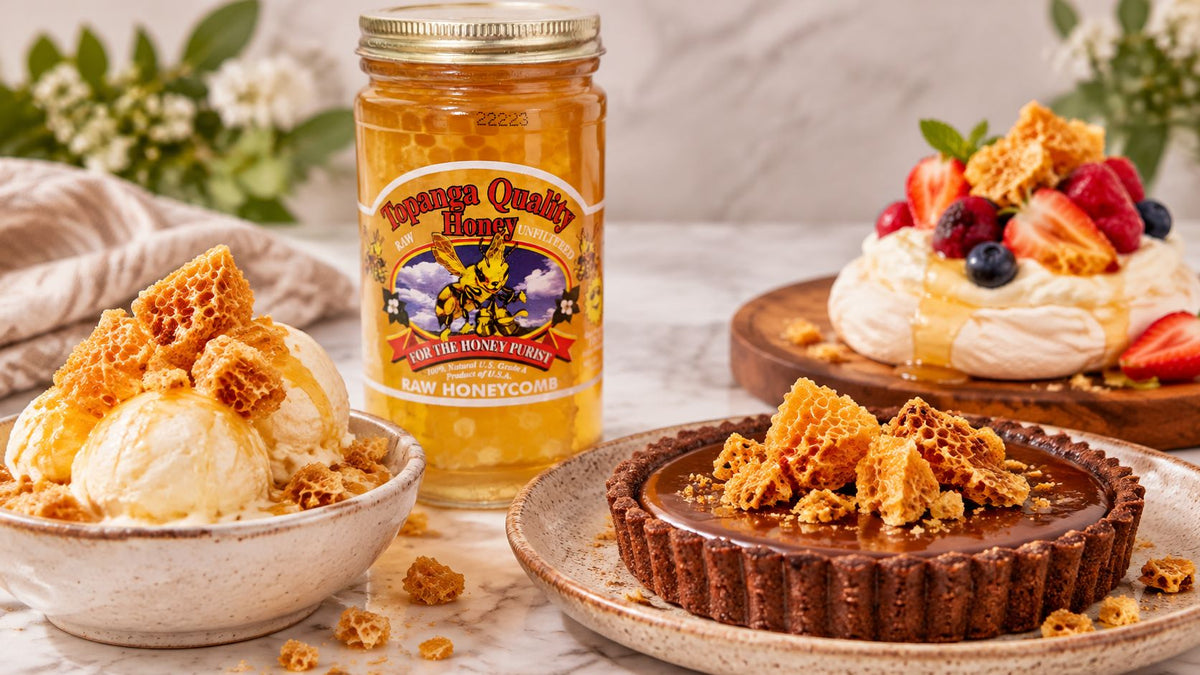
7 Desserts with Honeycomb Worth Making at Home
Honeycomb shows up in a cave painting near Valencia that is commonly dated to about 8000 BCE. About Manchester's history of sweets describes a person collecting it from a bee nest, thousands of years before refined sugar was ordinary food. That is still the ingredient I trust on a plate, honey held in wax.
Desserts with honeycomb use that food, or they use a lookalike. Crisp honeycomb candy is cooked sugar aerated with baking soda. The holes only resemble comb. Raw comb is honey sealed in chewable beeswax, and it tastes like the flowers the bees worked.
I pair pale, floral honeys with cream and fruit, and I save dark, malty honeys for chocolate and cheese. You'll get seven desserts with honeycomb here, each with a way to serve it and a light or dark honey that fits. Raw honey may crystallize in the jar. It is still good. Sit the jar in warm water, not boiling water, until it pours again.
Table of Contents
- 1. Honeycomb Toffee (Cinder Toffee)
- 2. No-Churn Honeycomb Ice Cream and Sundae
- 3. Honeycomb Cheesecake
- 4. Honeycomb Chocolate Bark
- 5. Honey Crème Brûlée with Honeycomb Shards
- 6. Honeycomb and Yogurt Parfait
- 7. Honey Panna Cotta with Crushed Honeycomb
- 7 Honeycomb Desserts at a Glance
- Start With Real Honeycomb
1. Honeycomb Toffee (Cinder Toffee)
Honeycomb toffee, also called cinder toffee, is the brittle inside a British Crunchie and an Australian Violet Crumble. Crush it and you have hokey pokey, the New Zealand way to finish ice cream. The candy is not comb from a hive. Sugar and honey cook until they can set hard, then baking soda floods the pot with bubbles.
BBC Food puts a typical candy recipe at approximately 146–150°C (300–310°F), with bicarbonate stirred in fast because the mixture sets quickly. Use a deep saucepan. The foam climbs. A thermometer beats guessing. One tablespoon of honey weighs about 21 g, so weigh it when the spoon is sticky. Crystallized honey goes into warm, not boiling, water before it hits the scale.
Watch how sharply the syrup rises once the soda hits.
Pour onto a lined tray and leave it until it is fully cold. Warm shards bend and turn sticky. Break large pieces for serving. Dust disappears into cream.
Leave the lid off while it cools. Steam trapped in a covered tray softens the bubbles you just made.
A light honey rounds the burnt-sugar edge. If you want the hive version instead of this candy, our note on what Topanga Quality Honey honeycombs are separates beeswax cells from confectionery foam.
2. No-Churn Honeycomb Ice Cream and Sundae
Fine candy stirred into the base too early is the usual failure. By morning the crunch is gone and the ice cream tastes only of sweet foam.
Whip cream to soft peaks, not stiff ones. Fold it into sweetened condensed milk and a pale honey, then freeze. No machine. Crush toffee in a sealed bag with a rolling pin, and keep some big pieces. Those go in last, right before the container hits the freezer.
Keep the Candy Out of the Base
BBC Good Food's honeycomb glossary is clear about wet desserts. Large shards hold their contrast. Small particles dissolve in dairy or custard, and the porous sugar drinks humidity until the snap is gone. Keep finished candy airtight, and add it at the table.
A bowl of vanilla ice cream is the right place for those late shards.
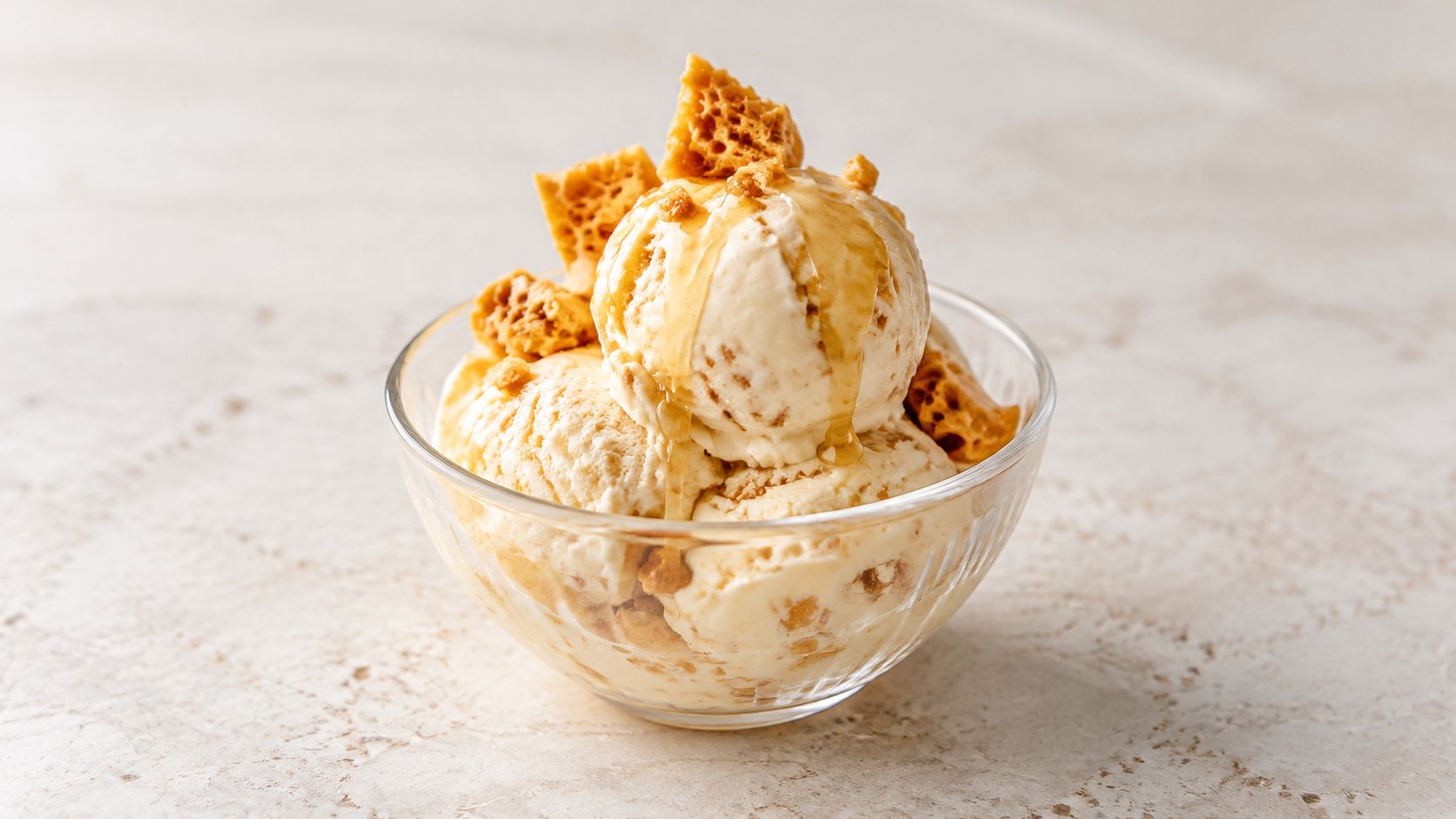
For a pale base, Raw Orange Blossom Honey fits well. The bees work citrus groves in full bloom, and the honey comes out light amber, raw and unfiltered, with a fresh citrus aroma and a smooth, silky body. A quiet sage honey is the softer floral choice if citrus feels loud. Dark honeys like buckwheat or avocado fight the vanilla here; save them for marinades and cheese boards.
For the sundae, warm butter and cream with raw cactus honey on low heat and stir until smooth. Honey sticks keep the pour even, and a sage stick adds sweetness without a strong honey flavor. Sauce first, candy last. A citrus version of this method is in the honey citrus ice cream notes.
3. Honeycomb Cheesecake
Cheesecake forgives almost everything except a topping added too early. The filling can be baked or set cold in the fridge, and the crust holds overnight, but the crunch goes on at plating.
Honey in the batter should stay mild so the cream cheese keeps its tang. A light spray of oil on the measuring spoon lets the honey slide out clean. Swap part of the sugar for honey rather than adding it on top of the full amount, or the filling turns cloying and bakes up softer than you want.
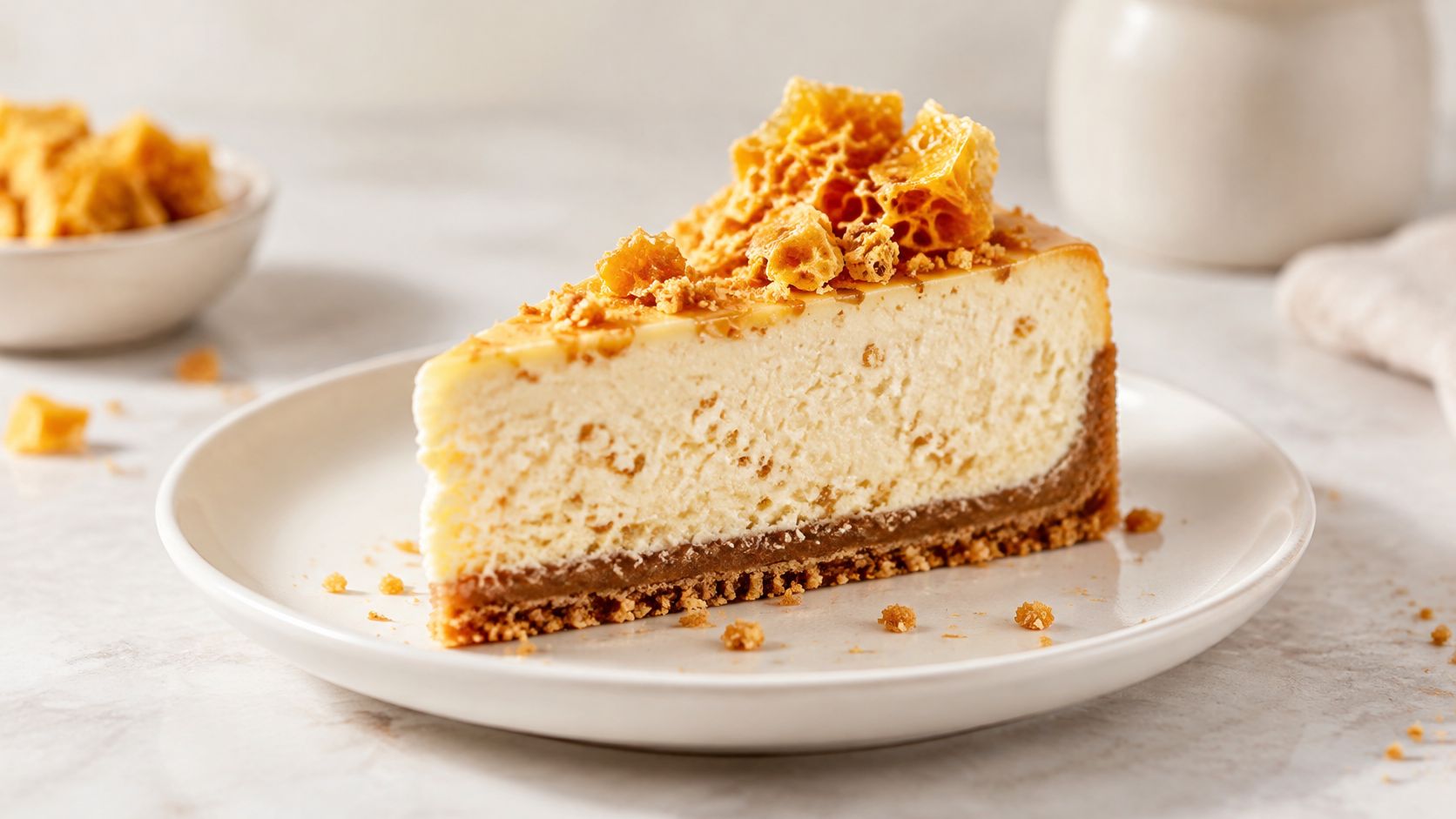
A sliced cake weeps if honey sits on it. Cut comb runs the moment the wax opens, and crushed candy bleeds syrup into the surface within the hour. Chill the cake well, slice with a hot dry knife, and spoon the honey or scatter shards over each piece as it goes to the table. If you crown the whole cake at noon for an evening party, the top will be sticky and the snap will be gone by dessert.
Use raw sage honey when you want a gentle floral note that won't shout over the cheese. Orange blossom is the brighter mild option if the menu is already citrusy. A dark honey like buckwheat reads as molasses here, so I save it for desserts that can stand up to it.
4. Honeycomb Chocolate Bark
Bark travels better than anything else on this list. It needs no oven, breaks into odd pieces on purpose, and keeps the honeycomb on show.
Melt dark or milk chocolate in short bursts and stir between each one. Spread it thin on a lined tray. Press the candy in lightly so it anchors without sinking into a solid slab, and leave bare chocolate between pieces. Seal the tin away from heat and humidity, or the sugar web goes soft overnight.
Handling note: A thin sheet with big pieces snaps clean. A thick brick travels better and eats worse.
Those gaps do real work. In a texture study of 3D-printed chocolate, 30 semitrained panelists rated the 25% and 50% honeycomb infill patterns better-looking than the fully filled version, and break force rose from 20.4 ± 1.1 N at 25% infill to 54.4 ± 1.5 N at 100% infill. On a bark tray the same principle holds: each space between candy pieces acts as a snap line, so a piece breaks away clean. A wall-to-wall topping drags and bends where a scattered one fractures.
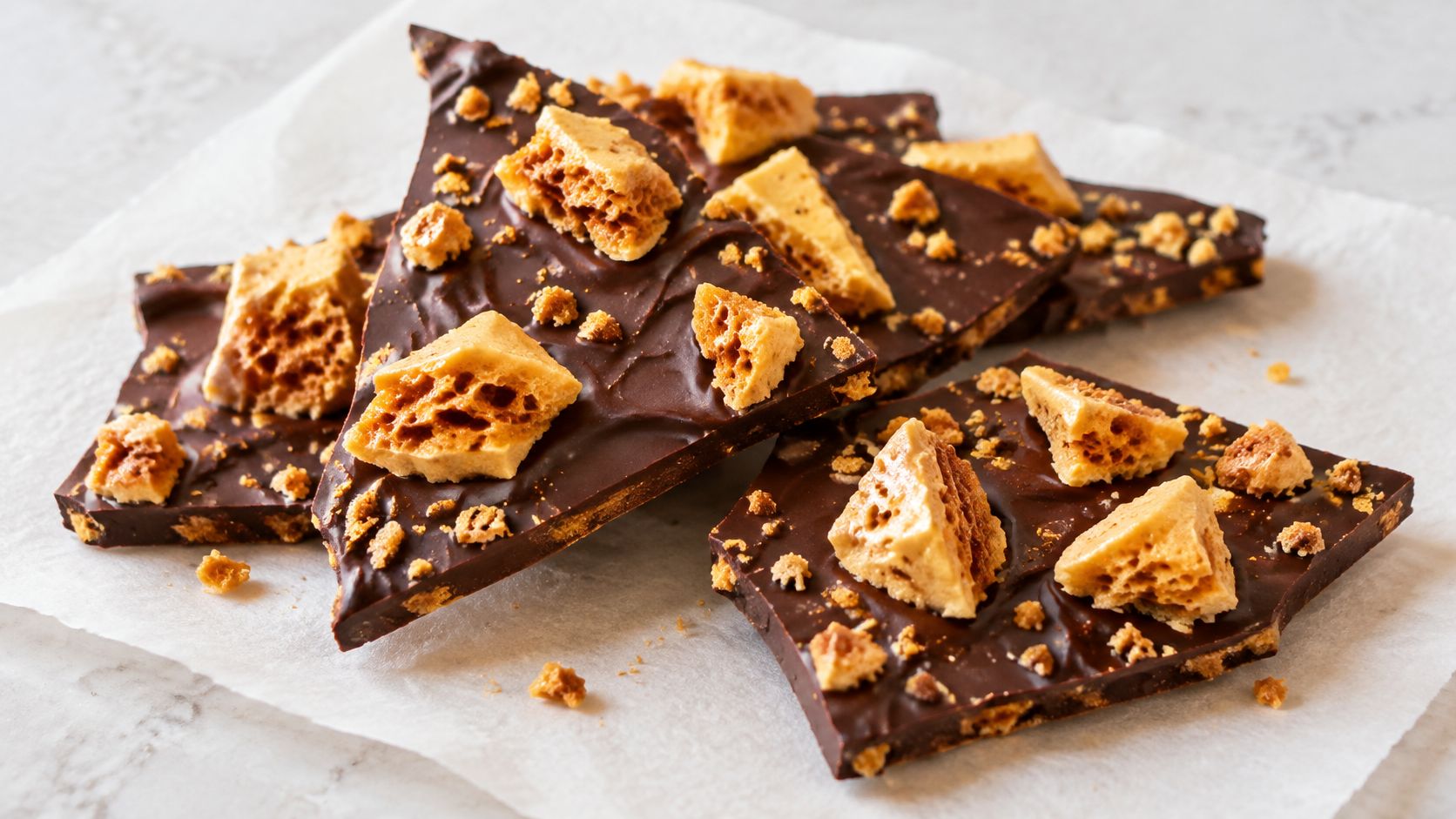
For the honey itself, go dark. Raw Buckwheat Honey pours almost black from the jar, with a malty, molasses-like flavor that runs less sweet than lighter honeys. I keep it out of the candy and spoon it beside the bark with strong coffee, where the malt can meet dark chocolate. A 1 lb piece of raw comb set in the same tin shows honey still sealed in wax that stays soft and chewable.
5. Honey Crème Brûlée with Honeycomb Shards
A torch gives you one thin crack of burnt sugar. Shards give you a second honey flavor and a louder crunch, which is what I want when the custard itself is already honey.
Swap part of the sugar for honey so the cup tastes floral instead of plain sweet. Bake the ramekins in a water bath at a low oven temperature, around 300°F (150°C), until the center only just sets. Pull them before they bubble. A dry, cracked top means the heat ran too long.
Choose the honey the way you'd choose a tea.
- Buttery and dark: Raw avocado honey keeps the custard mild and rich, closer to browned butter than to molasses.
- Deep and spicy: Buckwheat pushes the cup toward gingerbread. Use less, because it isn't shy.
- One clean serving: Sage Honey Sticks pour pale gold, taste clean and gently floral with a soft herbal finish, and stay liquid longer than most raw honeys. Snip a stick per ramekin. The mild flavor sweetens without a strong honey taste, so the cup still reads as custard.
Torch the sugar in a thin, even coat and let it harden for a minute. Add the shards when the cups hit the table.
6. Honeycomb and Yogurt Parfait
This is the weeknight plate. Thick yogurt, fruit, granola, and a honey drizzle, stacked in a clear glass so the layers do the talking. Yogurt first, then berries, then granola. Repeat once if the glass is tall.
Cut the candy or the comb at the last minute. A honey stick or a squeeze bear draws a thin line between fruit and granola without flooding the cup.
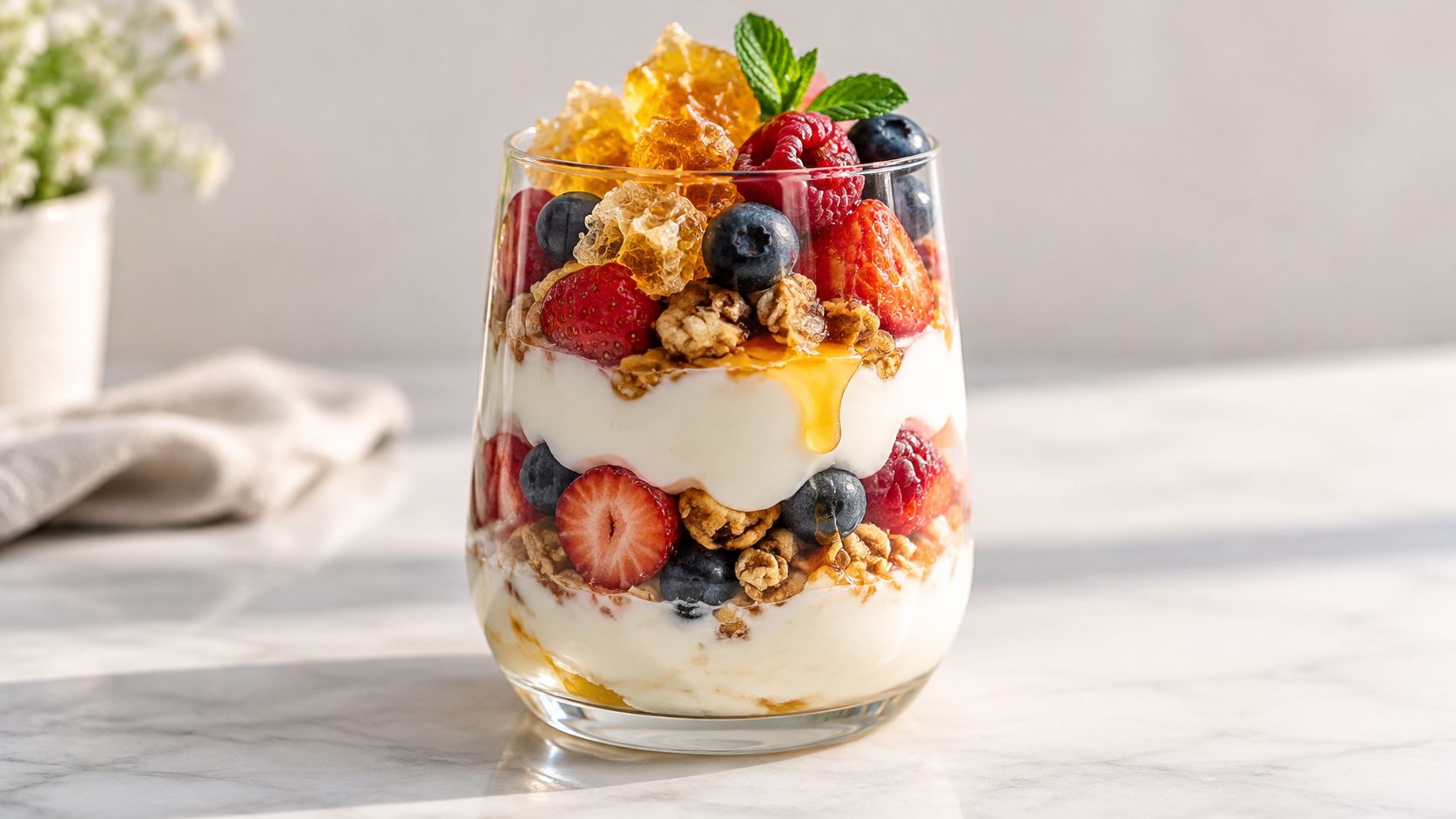
Sage honey is the drizzle I use on plain yogurt. A sage stick gives sweetness without a strong honey flavor, so berries stay bright. A dark honey turns muddy unless the fruit is cooked and bold, so save buckwheat for baked apples or roasted plums. For a crowd, build the yogurt and fruit ahead and keep the topping separate.
Cut comb pieces large enough to stay visible as tiles. Big squares sit proud on the granola and give one clean chew.
The wax and the honey staying sealed together is the point of what makes our honeycombs unique. That soft, chewable comb is the difference between a parfait and a sweet yogurt cup.
7. Honey Panna Cotta with Crushed Honeycomb
Panna cotta earns its place because the work is front-loaded. Warm the cream, sweeten it, set it with gelatin, then chill until the surface barely trembles. Stir honey in after the cream comes off the heat. Boiling strips the floral top notes, which are the reason to use honey here.
Bloom the gelatin in cold liquid first, then warm it only as the package directs. Orange blossom is my pick for a pale cup: light, citrusy, sweet enough to perfume the cream without staining it. Clover reads quieter and more buttery. Buckwheat or avocado will turn the custard dark and molasses-leaning; choose that only if the menu wants a heavier finish.
Unmold for a clean plate, or serve in glasses for an easier crowd. Spoon crushed honeycomb over the top at the table so each bite lands cold silk against brittle crackle. For a slower chew, set a small square of raw comb alongside, wax and all; the wax is soft enough to eat, while candy shards give a sharper snap.
7 Honeycomb Desserts at a Glance
| Dessert | Difficulty | Make-Ahead | Best Honey Pairing |
|---|---|---|---|
| Honeycomb Toffee (Cinder Toffee) | Moderate; hot sugar requires care | Airtight container once cooled | Buckwheat or avocado honey |
| No-Churn Honeycomb Ice Cream and Sundae | Easy; no ice cream maker needed | Freeze until firm; sauce holds chilled | Orange blossom or sage honey |
| Honeycomb Cheesecake | Moderate | Chill ahead; add honeycomb just before serving | Orange blossom or sage honey |
| Honeycomb Chocolate Bark | Easy; no baking required | Cool, dry storage once set | Buckwheat honey |
| Honey Crème Brûlée with Honeycomb Shards | Moderate; gentle baking required | Custard bakes ahead; torch the tops at serving | Avocado or buckwheat honey |
| Honeycomb and Yogurt Parfait | Easy; no cooking required | Prep components ahead; assemble just before serving | Sage honey |
| Honey Panna Cotta with Crushed Honeycomb | Moderate; requires setting time | Make ahead and chill; add topping just before serving | Orange blossom honey |
The toffee line deserves a word. Boiling sugar is hard on a pale honey, so I reach for a dark one. Buckwheat keeps its malt edge through the cook where sage or orange blossom would fade out.
Start With Real Honeycomb
The simplest dessert on this list needs no recipe at all. Cut a piece of comb for a board with brie or aged cheddar. Set a slice on warm toast or pancakes and watch the cells slump as the honey runs. Or chew a small piece straight. The wax is soft and chewable, and it carries the honey's flavor longer than a spooned drizzle.
We are Topanga Quality Honey, a family-owned California beekeeping company that packs all of its honey in California. It is raw, unfiltered, organic, and kosher. Raw honeycomb is a 1 lb piece of honey still sealed in its beeswax comb. We also pack an 11 oz square in its own box, the same sealed comb sized for a cheese board, toast, or yogurt.
Which comb and jar you reach for changes the dessert. Light honeys, sage, orange blossom, clover, and cactus, settle gently into tea, cream, and fruit, and sage is slow to crystallize, so it pours smooth over a parfait or panna cotta. Darker honeys, avocado, buckwheat, and eucalyptus, stand up to baking, marinades, and a cheese board. Gift sets are tasting sets of two or three varieties you choose, so a household can set a pale honey beside a dark one and compare them over dessert. Buy two or more eligible jars, honey bears, honey sticks, or honeycomb and you get 10% off.
USDA MyPlate states that honey can contain Clostridium botulinum and recommends waiting until a child is at least one year old. The warning applies to raw comb, honey candy, and cooked custard. Do not feed honey to infants under 12 months old.
A wedge of real comb, a light floral jar, and a darker malty one each change how these desserts with honeycomb taste and chew. Visit Topanga Quality Honey to pick a comb or a jar for the next plate.