

What Is Bee Pollen? A Simple Guide
Bee pollen shows up in smoothie bowls, health food stores and specialty honeys like our Super Honey. But what is it, exactly? Here's a plain-English guide.
What is bee pollen?
Bee pollen is flower pollen that forager bees collect and pack into tiny pellets, mixing it with a little nectar and saliva. Bees carry these pellets home on their hind legs in special "pollen baskets" and use them as the hive's main source of protein.
How is it collected?
Beekeepers fit a pollen trap at the hive entrance: a screen that gently brushes some of the pellets off the bees' legs as they walk in. The pellets fall into a tray, and the bees keep plenty for the hive.
What does it look and taste like?
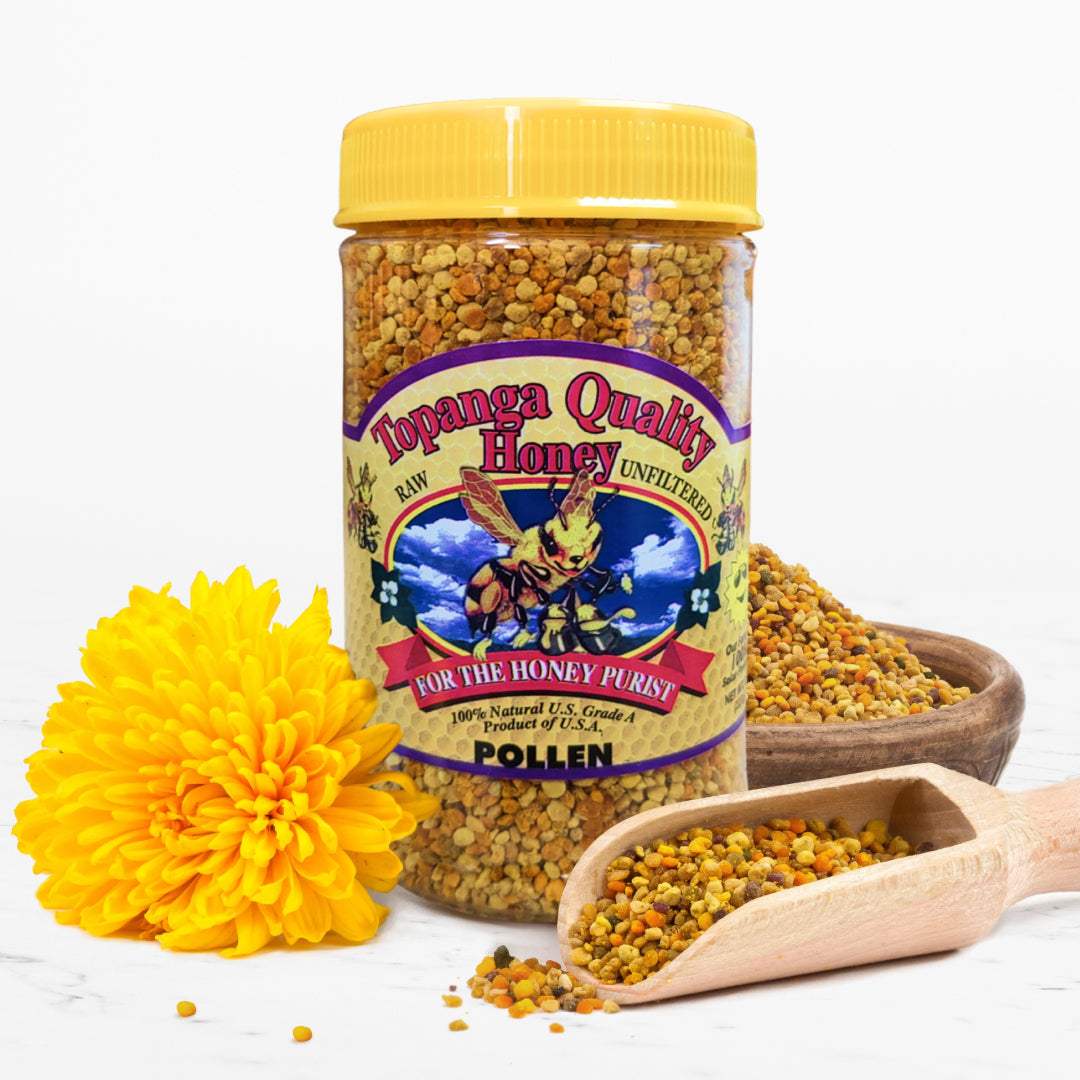
Bee pollen comes in many colors (yellow, orange, red, purple and even blue) depending on which flowers the bees visited. It tastes floral and slightly sweet, sometimes a little bitter, with a soft crunch that turns chewy.
How do people use it?
- Sprinkled over yogurt, oatmeal, granola or smoothie bowls
- Blended into smoothies
- Mixed into honey, as in our Super Honey, a South African honey blended with bee pollen, propolis and royal jelly
Who should avoid bee pollen?
- People with pollen or bee-sting allergies: bee pollen can cause allergic reactions, which can be serious.
- Anyone who is pregnant, nursing or taking medication: talk to your doctor first.
- Babies under 12 months: never give honey or honey products to infants.
How to store it
Keep bee pollen in an airtight container in the fridge or freezer to keep it fresh.
Shop Super Honey → | Honeycomb & specialty honey
Do not feed honey to infants under 12 months old.